English




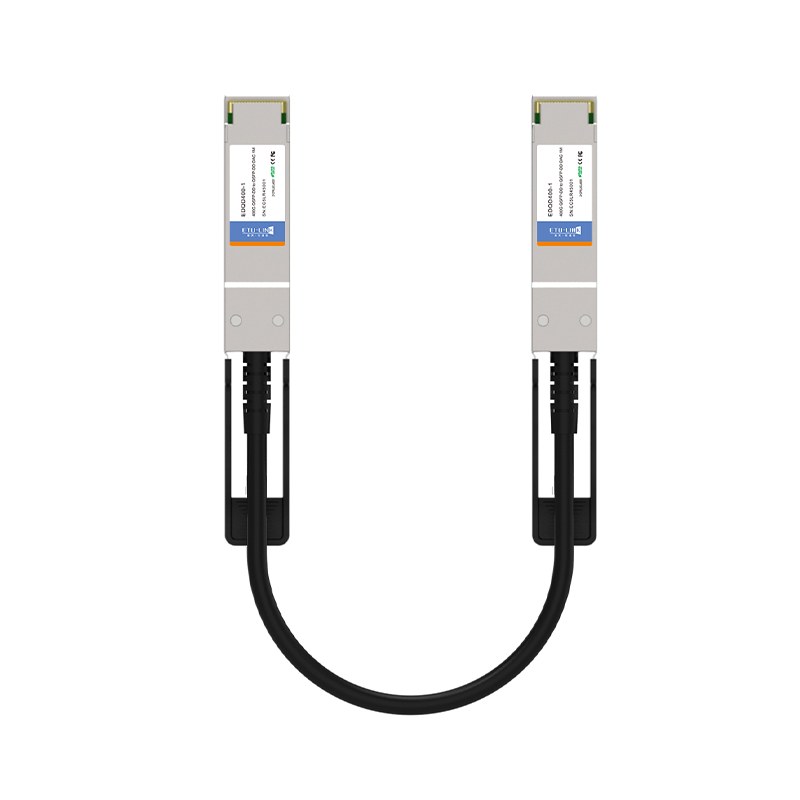
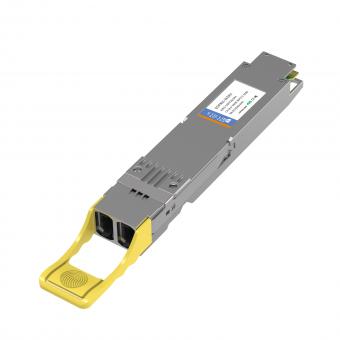
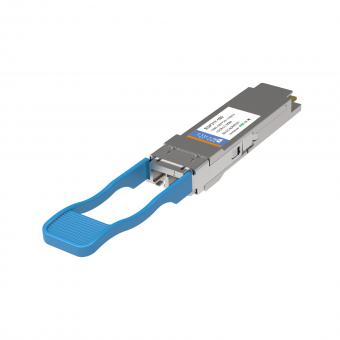
Product Model:
EDOP800-xxData Rate:
800GConnector:
OSFPProduct Origin:
Made in ChinaShipping Port:
ShenZhenBrand:
ETU-LINKIn Stock:

FAQ:
Q1: What is a DAC Cable (Direct Attach Copper Cable)?
A1: A high-speed DAC cable is a cost-effective solution for short-distance data transmission, commonly used in data centers, cloud computing, and enterprise networking to connect switches, servers, and storage devices.
Q2: What are the advantages of using DAC cables over optical transceivers?
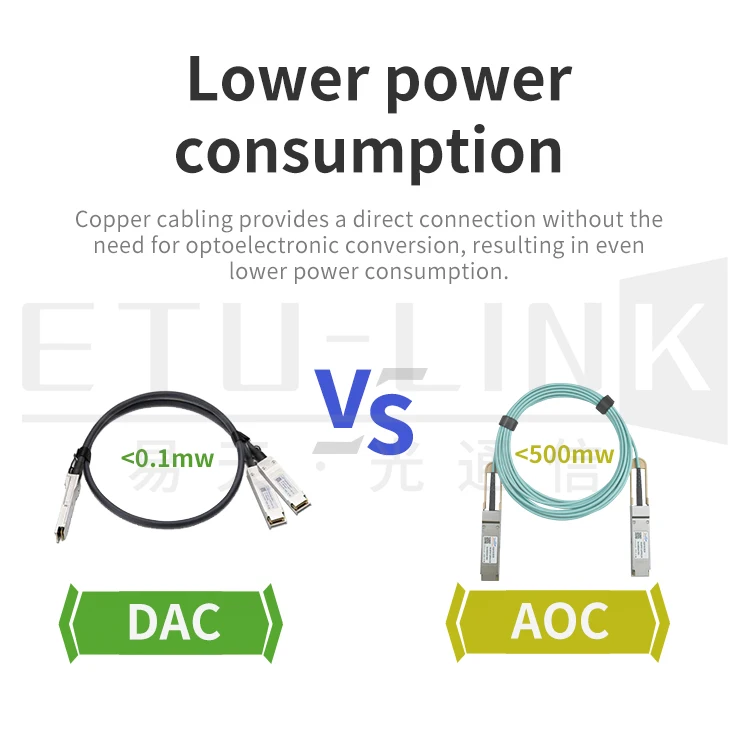
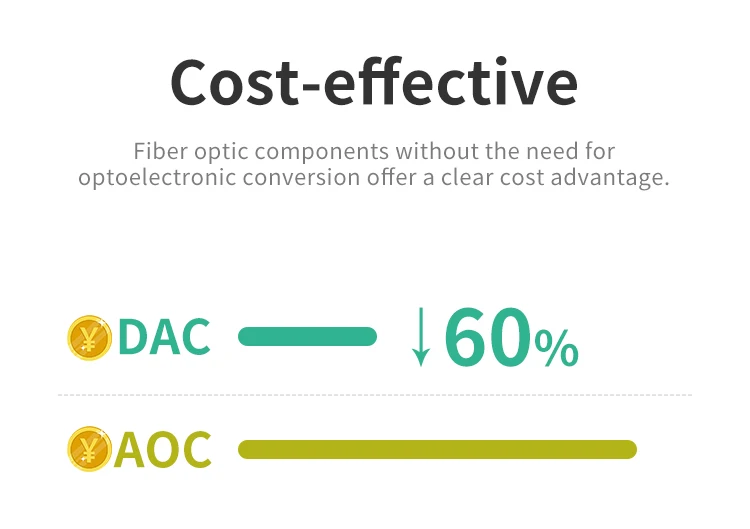
A2: Passive DAC cables are more affordable, consume less power, and offer lower latency than active optical cables (AOC) or fiber optics, making them ideal for 10G, 25G, 40G, and 100G Ethernet connections.
Q3: What lengths are available for SFP+ DAC, QSFP+ DAC, and QSFP28 DAC cables?
A3: Standard lengths range from 0.5m to 7m, with popular options like 1m DAC, 3m DAC, and 5m DAC cables for rack-to-rack connectivity.
Q4: Are DAC cables compatible with Cisco, HPE, Juniper, Dell, and Arista devices?
A4: Most SFP DAC and QSFP DAC cables are vendor-agnostic, but always verify compatibility with your switch or server model for seamless integration.
Q5: Can high-speed DAC cables support 400G Ethernet?
A5: Yes, QSFP-DD DAC and OSFP DAC cables now support 200G/400G data rates, ideal for hyperscale data centers and HPC (High-Performance Computing).
Q6: Do passive DAC cables require external power?
A6: No, passive copper DAC cables draw power directly from the device, reducing energy costs and heat dissipation in data center environments.
Q7: What is the maximum distance for DAC cable transmission?
A7: Copper DAC cables typically reach up to 7m—beyond this, consider active DAC cables or AOC/fiber optics for longer distances.
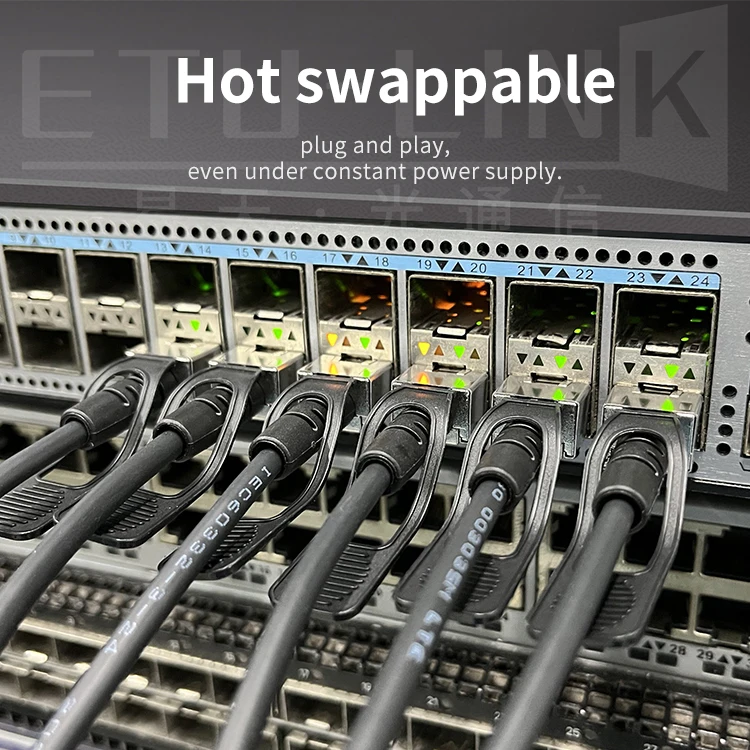
Q8: Are DAC breakout cables hot-swappable?
A8: Yes, hot-swappable DAC cables (e.g., QSFP+ to 4x SFP+ DAC) allow flexible deployment without system downtime.
Q9: How to choose the right DAC cable for 10G/40G/100G networks?
A9: Match your switch port type (SFP+, QSFP+, etc.), data rate, and length requirements. For high-density setups, opt for low-profile DAC cables.
Q10: What is the difference between passive DAC and active DAC cables?
A10: Passive DAC cables rely on device power and support shorter distances (up to 7m), while active DAC cables include signal amplification for extended reach (up to 15m) but consume more power.
If you are interested in our products and want to know more details,please leave a message here,we will reply you as soon as we can.
Categories
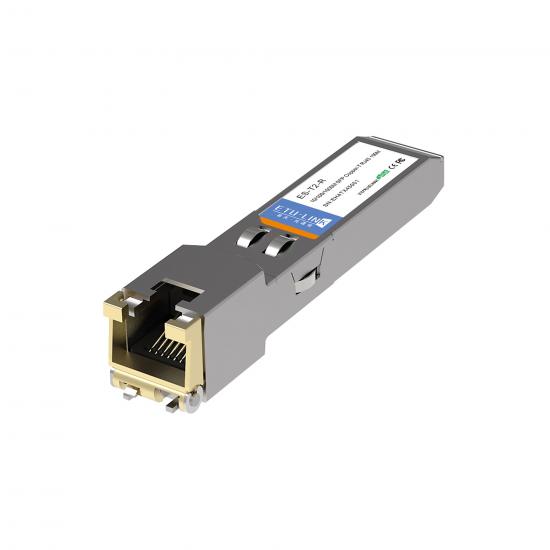
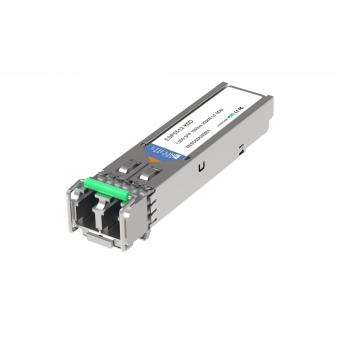
10/100/1000BASE-T copper SFP module designed to enable SFP-equipped networking devices to connect via standard copper twisted pair cabling.
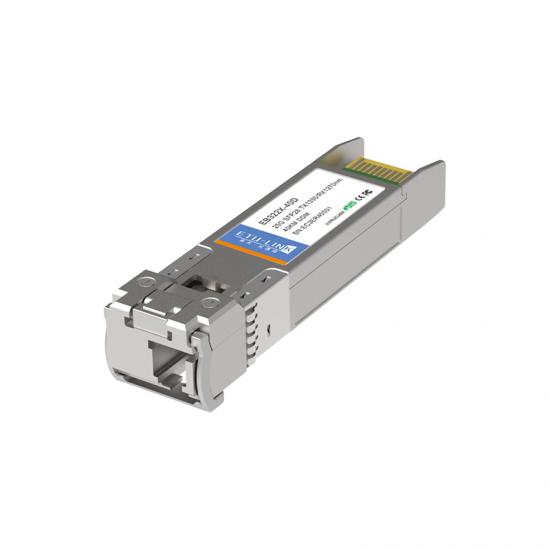
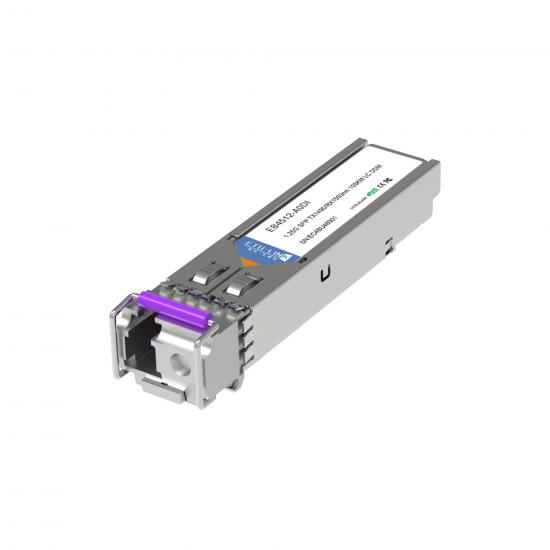
Transmitting at 1330nm and receiving at 1270nm over a single fiber strand, it enables full-duplex 25.78 Gbps data transmission.
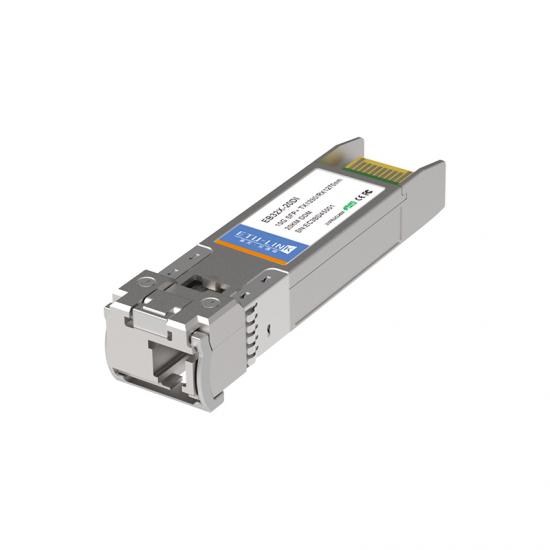
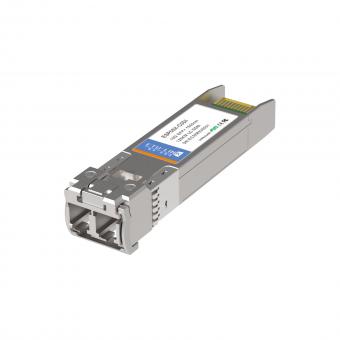
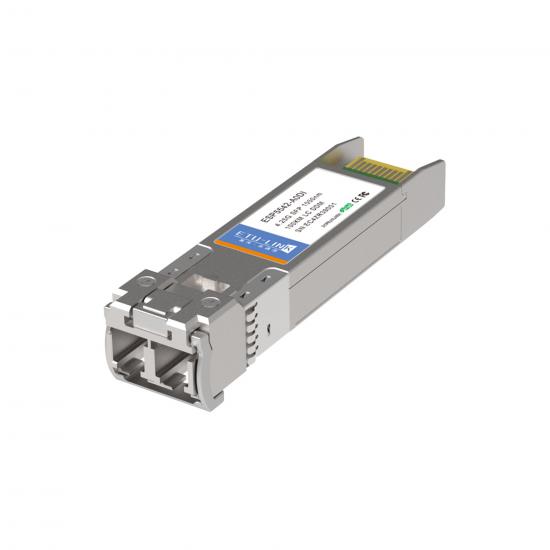
High-performance single-fiber bidirectional module designed for 10 Gigabit Ethernet (10GbE) and fiber-optic access networks.
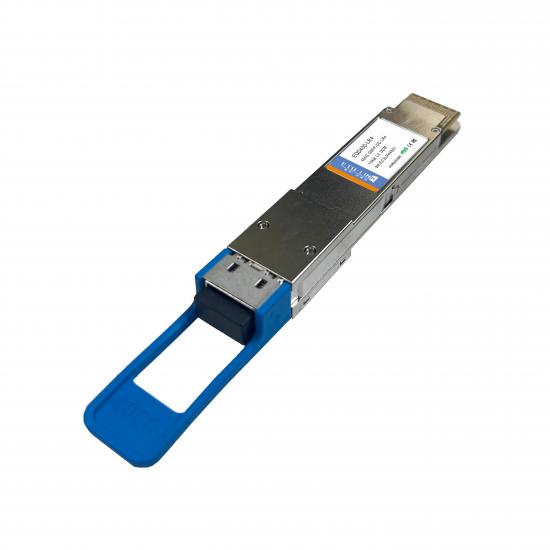
400G QSFP-DD LR4 10km LC Optical Transceiver The 400G QSFP-DD LR4 transceiver is a high-performance optical module designed for long-distance 400 Gigabit Ethernet applications. It leverages PAM4 modulation and CWDM lasers to achieve 10km transmission over single-mode fiber (SMF), complying with IEEE 802.3bs and QSFP-DD MSA standards. Featuring dual LC connectors with a 12W max power consumption, ensuring energy-efficient operation in data center interconnects and metro networks. Applications: Data center interconnects between remote sites. 5G fronthaul/midhaul networks requiring high-bandwidth, low-latency links. Enterprise and cloud service provider infrastructures scaling to 400G. RoHS compliant and engineered for future-proof networking, this transceiver enables seamless migration to next-generation 400G architectures. Compliant with 100G Lambda MSA: 400GBASE-LR4-10 optical interface Compliant with IEEE 802.3bs standard: 400GAUI-8 electrical interface Compliant with QSFP-DD MSA HW Rev 5.1 type 2 housing with duplex LC connector Compliant with QSFP-DD CMIS Rev 4.0 Operating distance at engineering link of up to 10km Maximum power consumption 10 W Case operating temperature 0°C to 70°C Two wire serial Interface with digital diagnostic monitoring Complies with EU Directive 2011/65/EU(RoHS compliant) Class 1 Laser 200G QSFP56 SR4 100M 400G QSFP-DD SR8 100M 400G QSFP-DD DR4 2KM 400G QSFP-DD LR4 10KM 400G OSFP SR8 100M 200G 400G 400G 400G 400G 100M 100M 2KM 10KM 100M 850nm 850nm 1310nm CWDM 850nm MPO MPO MPO LC MPO MM MM SM SM MM DDM DDM DDM DDM DDM COM: 0°C ~70°C COM: 0°C ~70°C COM: 0°C ~70°C COM: 0°C ~70°C COM: 0°C ~70°C FAQ: Q1: What is 400G QSFP-DD? A1: It is a high-density, hot-pluggable optical module interface supporting 400Gbps data rates, featuring 8 electrical channels for enhanced bandwidth. Q2: What are the main types of 400G QSFP-DD modules? A2: Common variants include SR8 (short-range), DR4/FR4 (intermediate), LR4/LR8 (long-range), and ER4/ER8 (extended-reach), with transmission distances ranging from 100m to 40km. Q3: How does OSFP differ from QSFP-DD? A3: OSFP has a larger form factor and non-compatible electrical interfaces, while QSFP-DD is backward-compatible with QSFP28 modules. Q4:What encoding scheme does 400G OSFP use? A4: Data Rate 53.125Gbps (PAM4) per channel(Maximum power consumption 12W), balancing speed and complexity. Q5: What is the maximum transmission distance for 400G QSFP-DD LR4? A5: The LR4 variant supports up to 10km over single-mode fiber (SMF) using 4x106Gbps lanes, ideal for 5G and cloud interconnects. (https://www.etulinktechnology.com/400g-qsfp-dd-lr4-10km-lc-optical-transceiver_p330.html) Q6: What is the electrical interface of QSFP-DD? A6: The module converts 8 channels of 50Gb/s (PAM4) electrical input data to 4 channels of CWDM optical signals and multiplexes them into a single channel for 400Gb/s optical transmission. Q7: Does QSFP-DD support digital diagnostics? A7: Yes, it includes DDM (Digital Diagnostic Monitoring) per MSA standards, enabling real-time monitoring of temperature, voltage, and optical power. Q8: What DAC options exist for 400G QSFP-DD? A8: Available configurations include direct QSFP-DD-to-QSFP-DD, or breakout to 2x200G QSFP56/4x100G QSFP56/8x50G SFP56 for flexible scaling. Q9: How does OSFP differ from QSFP-DD? A9: OSFP has a larger form factor and non-compatible electrical interfaces, while QSFP-DD is backward-compatible with QSFP28 modules.
For inquiries about our products or pricelist, please leave your information with us and we will be in touch with in 24 hours.


 13th Floor, Building 6, Honghualing Base, Nanshan Intelligent Manufacturing Base, Liuxian Avenue, Taoyuan Street, Xili, Nanshan District, Shenzhen, China
© Copyright: 2026 ETU-Link Technology CO ., LTD All Rights Reserved.

IPv6 network supported
Friendly Links:
易天官网