English




Guidelines for maintaining and cleaning fiber optic patch cords
We all know that fiber optic patch cords are widely used equipment connection accessories in the field of optical communications. It can connect a variety of network equipment and devices with fiber interfaces, such as optical modules, adapter panels, distribution boxes, wavelength division multiplexers and solutions. Multiplexers, fiber optic transceivers, etc. Fiber optic patch cords are core passive cabling components for data centers, campus networks and telecom transmission. Regular cleaning and standardized storage directly reduce link attenuation, packet loss and hardware failure. This full guide covers connector cleaning methods, storage specifications, fault detection tools and daily maintenance standards for SC/LC/MPO fiber jumpers.
Ⅰ.Timely Cleaning of Fiber Connector End Faces
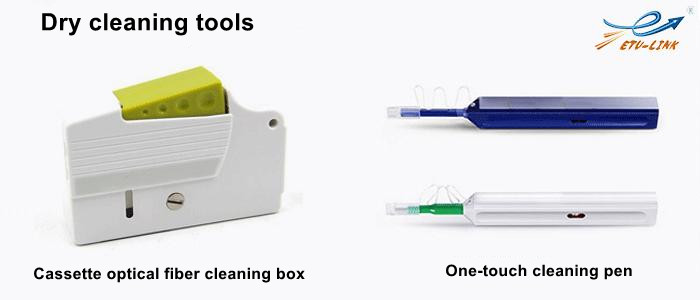
The contamination of the connector of the fiber patch cords is an important cause of network failure. The fiber end face of the connector is contaminated by dust, which will result in poor optical signal transmission quality. Generally, the main location for cleaning the optical fiber is at the connector ports at both ends. There are two main cleaning methods, one is dry cleaning, and the other is wet cleaning. Commonly used dry cleaning tools include cassette-type fiber optic cleaning boxes and one-touch cleaning pens, and wet cleaning tools include dust-free wipes and cleaning sticks.
Standard cleaning process: inspect with fiber microscope → dry clean for loose dust → wet clean for oil stains → recheck before plugging into SFP/QSFP ports. One-click cleaners match LC 1.25mm and SC 2.5mm ferrules separately; MPO multi-fiber connectors require dedicated array cleaning tools.
Standard wet cleaning operation: Dip one corner of lint-free wipe with 99% isopropyl alcohol, wipe ferrule in single straight stroke, then dry with dry area of the same wipe to avoid alcohol residue forming white film on end face.
Ⅱ.Standard Storage & Placement Rules For Fiber Jumpers
No matter whether the optical fiber patch cords is in use or not, do not bend or stretch it excessively. Some damages caused by bending are visible to the naked eye, however, the loss in some cases may not be easily judged, such as micro-deformation of optical fiber caused by ultra-low temperature, millimeter-level displacement caused by defects in buffers or jackets, poor installation, or other factor. Since such damage cannot be found directly, it is often overlooked and may cause bigger problems in the long run. To avoid further losses, we should pay attention to the following points:
(1)Do not bend the fiber patch cords beyond its minimum bending radius, especially in the narrow space of high-density fiber wiring.
Industry standard minimum bend radius: Static storage ≥30mm; dynamic wiring ≥15mm for 2.0mm simplex patch cord; bend-insensitive G.657 fiber can reach 10mm minimum bend, ordinary OS2 single-mode fiber shall not be folded sharply to avoid permanent microbend attenuation.
(2)Use appropriate tools to redesign the fiber patch cords path to protect the cables from damage, such as horizontal cable management racks.
Deploy vertical/horizontal fiber troughs, cable comb and patch panel cable managers to reduce extrusion and torsion during cabinet wiring; separate fiber jumpers from power cables to prevent high-temperature jacket aging.
(3)Do not hit the fiber connector, otherwise the end face may be worn away, and the fragments will pierce the skin. Therefore, it is recommended to put a dust cap on the patch cords at any time.
Dust caps must be covered immediately after unplugging connectors; lost caps lead to continuous dust accumulation on ferrule, which increases repeated cleaning workload and accelerates end-face abrasion.
(4)If you need equipment to detect and identify faults, such as damage and full attenuation inside the fiber patch cords, you can use an optical time domain reflectometer (OTDR) and a fiber microscope.
Fiber microscope is used for real-time end-face contamination & scratch inspection; OTDR can locate hidden breakpoints, microbend loss and long-term fiber aging faults along the whole jumper length, suitable for pre-acceptance and network troubleshooting.
Ⅲ. Long-Term Daily Maintenance Suggestions
The above is the daily cleaning and maintenance items and storage precautions of optical fiber introduced by ETU-LINK. We hope these tips can help you deploy a safer and more stable optical fiber wiring system and bring you higher benefits.
1. Regular maintenance cycle: Clean all trunk and access fiber connectors every 3 months for data center; outdoor fiber distribution box jumpers need monthly inspection.
2. Replacement standard: Replace jumpers if ferrule has permanent scratches or jacket crack, which cannot recover after cleaning.
3. Environmental control: Keep cabinet temperature 18–28℃, low dust to reduce connector contamination frequency.
4. Matching suggestion: ETU-LINK provides UPC/APC LC/SC/MPO patch cords and supporting cleaning kits, fully compatible with all brand optical modules and distribution frames.
Last updated: Oct.15, 2026
For inquiries about our products or pricelist, please leave your information with us and we will be in touch with in 24 hours.


 13th Floor, Building 6, Honghualing Base, Nanshan Intelligent Manufacturing Base, Liuxian Avenue, Taoyuan Street, Xili, Nanshan District, Shenzhen, China
© Copyright: 2026 ETU-Link Technology CO ., LTD All Rights Reserved.

IPv6 network supported
Friendly Links:
易天官网