English




Reuters reports that the U.S. FCC is pushing forward with new regulations that plan to restrict the entry of Chinese-made 1.6T and 3.2T high-speed optical modules into the U.S. market. On August 7, a third supplementary rule announcement was released, officially opening a 30-day comment period followed by a 45-day response period for public feedback. The US has repeatedly raised the issue of "data...

The rapid upgrade of AI computing power and the significant increase in network transmission bandwidth and latency requirements for large-scale model training have rendered traditional 400G networks, which are now limited in performance and unable to meet the demands of high-end intelligent computing scenarios, a new iteration cycle has begun.The industry is now entering a phase of large-scale com...

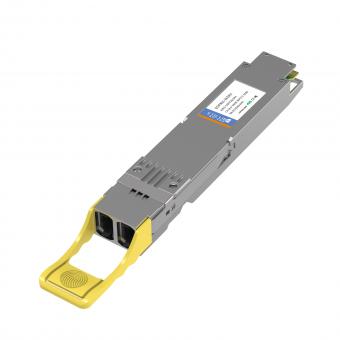
AI computing infrastructure is expanding at full speed. 800G OSFP and QSFP-DD Optical Modules have fully entered the market adoption cycle. The industry is generally showing a differentiated pattern where leading manufacturers are operating at full capacity and order schedules are lengthening, while small and medium-sized manufacturers are accelerating production expansion to grab market share. Th...

As the AI computing power race intensifies, Google is aggressively expanding its global computing infrastructure. In this arms race, optical modules, serving as the "highway" for data transmission, have become one of the core procurement categories for Google's data center construction. Based on data from third-party organizations such as TrendForce and LightCounting, the following outlines the ke...

With the continuous growth of data center traffic, 100G networks have become the industry standard. However, many engineers often face a practical problem when deploying 100G networks: what kind of patch cord should be used with 100G optical modules? Choosing the wrong one can lead to signal attenuation, link failure, or even equipment damage. This article provides a professional overview of the p...
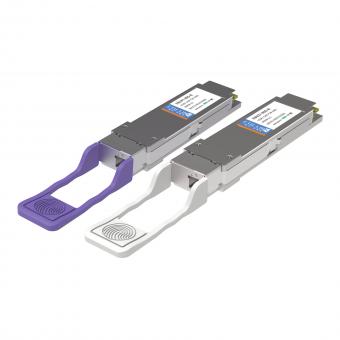
With the explosive growth of cloud computing and AI big data models, and the iterative upgrade from 5G to 6G, network bandwidth demand has seen an explosive increase. From backbone networks to metropolitan area networks, from data center interconnect (DCI) to enterprise core networks, 400G has become the "mainstream threshold" for high-speed transmission. Among them, 400G QSFP-DD LR4, with its uni...

As the core hub of optical communication systems, the rate iteration of optical modules determines the data transmission efficiency and upper limit, supporting the upgrading of industries such as digital economy, AI computing power, and 5G communication. From 1.25G to 800G, the iteration of optical modules is accompanied by innovations in architecture, principles, and performance. This article wil...

I. Basic Definition of TEC TEC stands for thermoelectric cooler, a miniature semiconductor solid-state temperature control element. Lasers in optical modules are highly sensitive to temperature; temperature fluctuations can easily cause problems such as wavelength shift, power instability, and signal degradation. Therefore, mid-to-high-end high-speed optical modules commonly incorporate miniature ...
Categories
New Blog
Tags
For inquiries about our products or pricelist, please leave your information with us and we will be in touch with in 24 hours.


 Factory: Right Side Of 3rd Floor, No. 102 Building, Longguan Expressway, Dalang Street, Longhua District, Shenzhen
Office: Floor 4, Building 4, Nanshan Yungu Phase ll, Taoyuan Community, XiliStreet,Nanshan District, Shenzhen
© Copyright: 2026 ETU-Link Technology CO ., LTD All Rights Reserved.

IPv6 network supported
Friendly Links:
易天官网