English



One minute to understand the fiber media converter
What is a Media converter? Do you understand its applications and features? Today, ETULINK will take you to understand what a Media converter is.
Ⅰ.What Is Fiber Media Converter & How Does It Work?
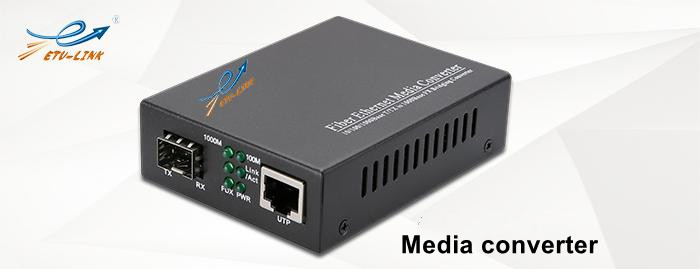
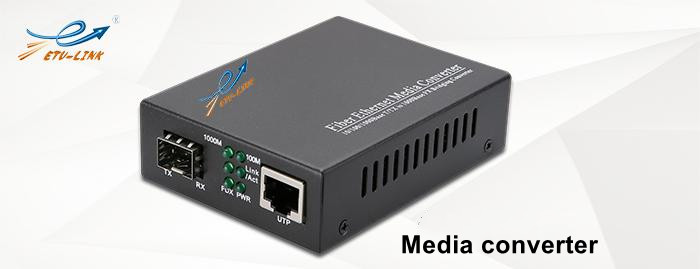
Media converter is a communication device that converts short-distance Ethernet electrical signals and long-distance optical signals into each other, ensuring smooth transmission of data packets between two networks. It has two ports, one end is an optical fiber interface, another end is the Ethernet interface.
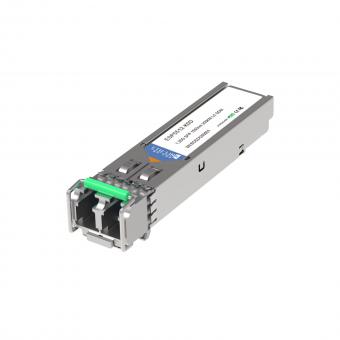
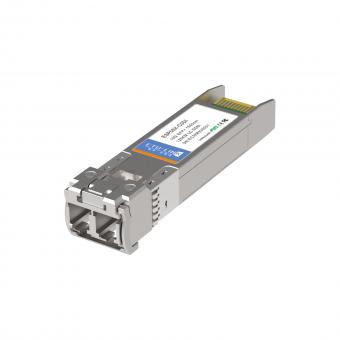
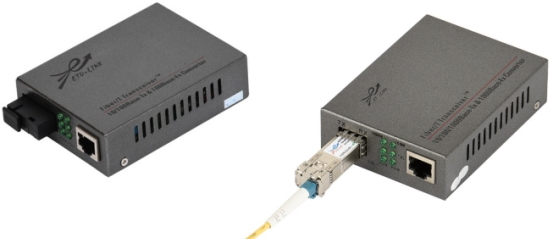
As far as fiber optic ports are concerned, there are two types. One type is to directly plug in fiber jumpers (SC, ST and other adapters), and the other is to plug in optical modules (SFP, SFP+, etc.). As for the network port, it is converted to an RJ4 network cable design. So what are its characteristics and applications?
Ⅱ. Main Classification Of Fiber Media Converters
Media converter have the characteristics of low loss, wide frequency bandwidth, low cost, easy maintenance, short delay, and reliable working performance. They can also support an ultra-wide operating temperature range and a complete transmission distance (0 to 120KM).
Media converter can be divided into three types according to transmission rate: 10/100M, 10/100/1000M, and 1000M.
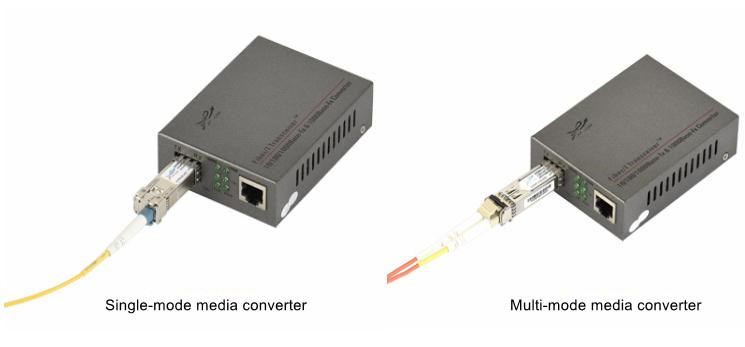
According to the nature of the fiber used, it can be divided into: single-mode fiber media converter and multi-mode fiber media converter. The multi-mode fiber media converter is only 550M-5KM, while the single-mode media converter has a wider coverage range, 20KM-120KM.
Additional classification dimensions:
1. By hardware port architecture: Fixed‑optical‑port media converter (built‑in transceiver, fixed distance/wavelength); SFP slot‑type media converter (hot‑pluggable SFP module for flexible rate & distance adjustment).
2. By management mode: Unmanaged plug‑and‑play type; Managed media converter supporting SNMP remote monitoring, VLAN configuration.
3. By working environment: Commercial indoor type(0‑40℃); Industrial wide‑temperature model(-40~85℃) for factory, outdoor cabinet.
4. Special variant: PoE media converter, supplies power for IP cameras over RJ45 copper port.
Ⅲ. Typical Application Scenarios For Media Converters
It is mainly used in switches, computers, and the interconnection between switches and computers. In addition, it is also used in high-reliability data transmission fields such as telecommunications, railways, shipping, and cable TV. It is generally used in long-distance transmission solutions. Mainly used in telecommunications networks, schools, offices, Internet cafes and other fields.
Common real‑world deployment cases:
1. IP security monitoring: Connect remote cameras to monitoring room via fiber, break 100m copper cable distance limitation;
2. Campus / office network transformation: Old switches without SFP optical port, add fiber uplink without replacing original network hardware;
3. Industrial workshop & railway communication: Industrial‑grade media converter resists electromagnetic interference for field equipment data upload;
4. Building cross‑floor interconnection: Cost‑effective solution for short‑range fiber extension instead of expensive enterprise optical switches;
5. Community broadband access: For small‑scale FTTB fiber‑to‑building access network.
Ⅳ. What Is SFP Slot‑Type Media Converter?
Take SFP Media converter as an example. SFP Media converter can be interconnected through optical modules. They are different from ordinary Media converter only in the optical port. It offers flexibility in transmission rates, operating distances and fiber optic network types, providing maximum convenience for fiber to copper Ethernet conversion applications.
It also has five features:
1. High flexibility and hot-swappable SFP port;
2. 1600byte (byte) large data packet transmission;
3. Full-duplex flow control, half-duplex back pressure;
4. Link failure pass-through (LFPT);
5.Full LEDs indicate power and network status.
Ⅴ. Fixed‑Port VS SFP‑Slot Media Converter — How To Select?
1. Choose fixed‑port media converter: Cost‑sensitive, fixed transmission distance requirement, mass deployment for monitoring projects, plug‑and‑play without module configuration. Disadvantage: Transmit distance and wavelength cannot be modified after purchase.
2. Choose SFP slot‑type media converter: Requirement for flexible adjustment of transmission distance, future network upgrade reserve, mixed multimode / single‑fiber BiDi links. You only need to swap SFP modules to change fiber parameters without replacing the whole hardware box.
Ⅵ. ETU‑LINK supplies complete series of fiber media converters:
1. 10/100M & Gigabit fixed SC port media converter: multimode / single‑mode 20‑120km options;
2. SFP slot‑based gigabit media converter, support hot‑swap SFP transceivers with LFPT function and jumbo frame;
3. Industrial wide‑temperature media converter and 19‑inch rack‑mount 16‑slot chassis for centralized cabinet deployment;
4. Matching accessories: SFP optical modules, single/multimode fiber patch cords, DC power adapters.
All units pass long‑term aging test, compatible with mainstream brand switches, IP cameras and surveillance NVR equipment.
The above is the product introduction of the Media converter. For more information, welcome to visit our website!
Last updated: August 25 2026
Previous :
What is SOA?Next :
Characteristics and Solution of 16G CWDM SFP+ Optical ModuleFor inquiries about our products or pricelist, please leave your information with us and we will be in touch with in 24 hours.


 13th Floor, Building 6, Honghualing Base, Nanshan Intelligent Manufacturing Base, Liuxian Avenue, Taoyuan Street, Xili, Nanshan District, Shenzhen, China
© Copyright: 2026 ETU-Link Technology CO ., LTD All Rights Reserved.

IPv6 network supported
Friendly Links:
易天官网