English




Application of 8G SFP+ FC optical module in SAN storage network
This article explains 8G SFP+ Fibre‑Channel optical‑module basics, SAN‑network composition, typical cabling topology, module‑fiber‑matching rules, common SAN‑field troubleshooting and hardware‑selection guidance for storage administrators, SAN integrators and data‑center O&M engineers.
SAN refers to the regional storage network, which needs to be connected by optical fiber, and the operation mode of the SAN mainly depends on the hardware. The structure of the SAN allows any server to connect to any storage array so that the server can directly access the data it needs no matter where it is located. Due to the optical fiber interface, the SAN also has a higher bandwidth.
The SAN solution is to separate the storage function from the basic function, so there is no need to consider their impact on the overall performance of the network to run the backup operation. The SAN solution also simplifies management and centralized control, especially when all storage devices are clustered together. Next, ETU-LINK will introduce how to use 8G SFP+ FC optical modules to build a SAN storage network.
The composition of a SAN network is mainly composed of servers, Fibre Channel switches, storage devices, and transmission carriers. The SAN network adopts Fibre Channel technology, which is connected to the storage array and server host through optical switches to establish a dedicated data storage area network. If multiple servers and storage arrays are not involved, you can directly connect the server to the storage device.

Ⅰ. What Is 8G SFP+ FC Optical Module And SAN Hardware Connection Flow
The server has an extended PCI-E bus interface. We need to insert an 8G HBA fiber optic network card in the PCI-E slot, and then insert 8G FC SFP+ optical modules into the HBA fiber optic network card and the fiber channel switch, and then use duplex LC Fiber optic patch cords to connect the devices at both ends. The connection diagram is shown below:

Ⅱ.ETU‑LINK 8G SFP+ FC Module Models
ETU Model
Product Description
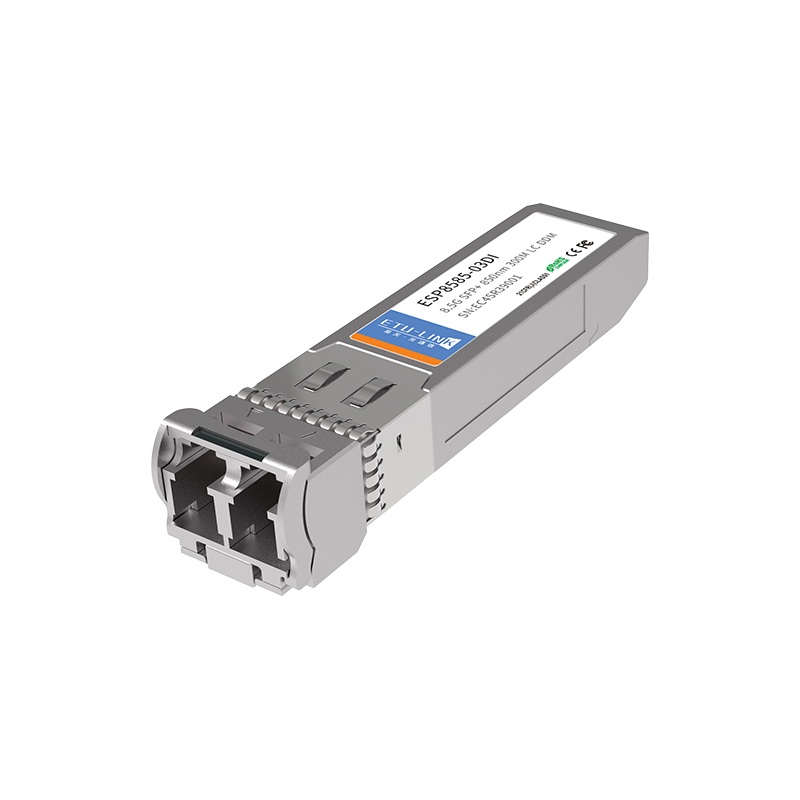
ESP8585-03D
8G SFP+ 850nm MM DX 300M optical module
ESP3185-2D
8G SFP+ 1310nm SM DX 2kM optical module
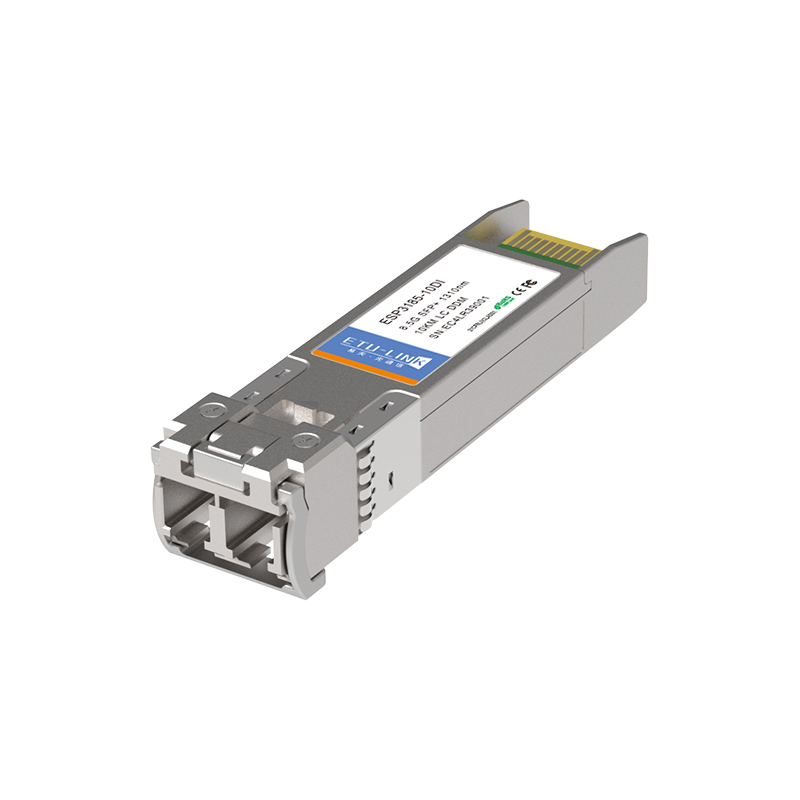
ESP3185-10D
8G SFP+ 1310nm SM DX 10KM optical module
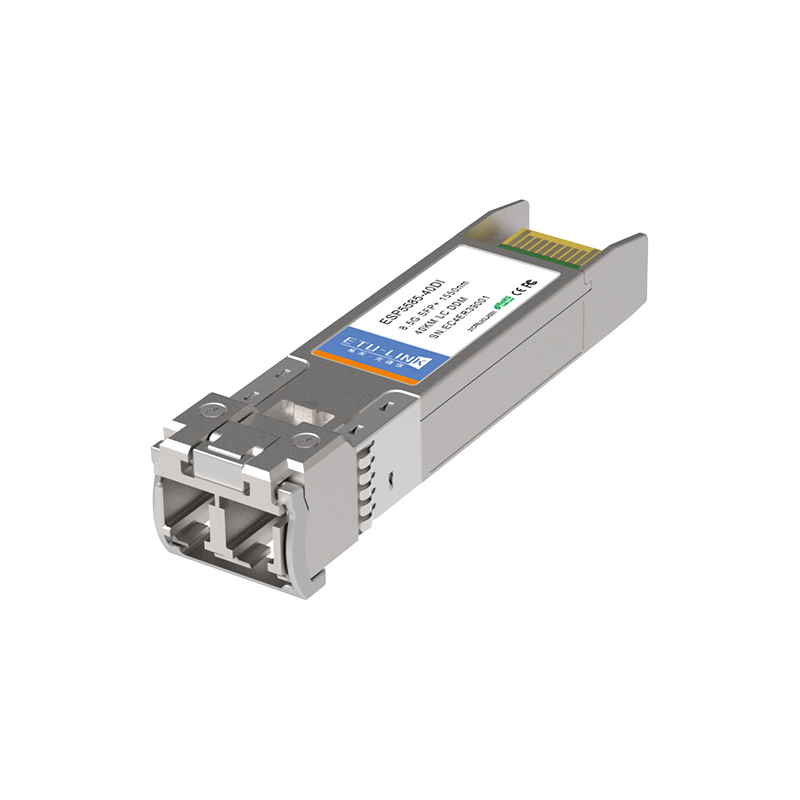
ESP5585-40D
8G SFP+ 1550nm SM DX 40KM optical module
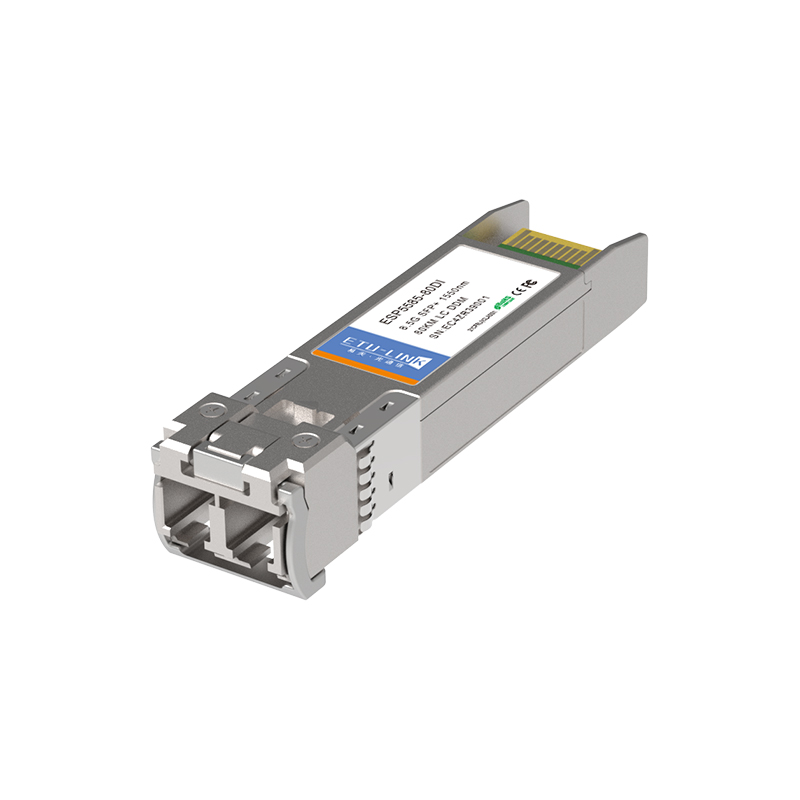
ESP5585-80D
8G SFP+ 1550nm SM DX 80KM optical module
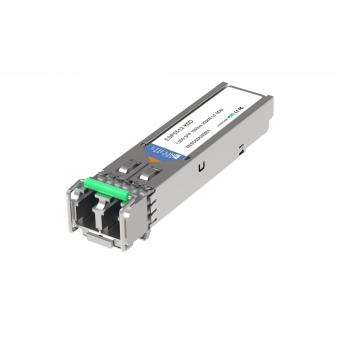
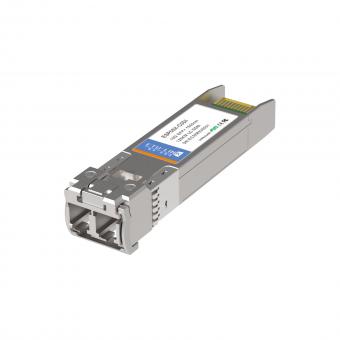
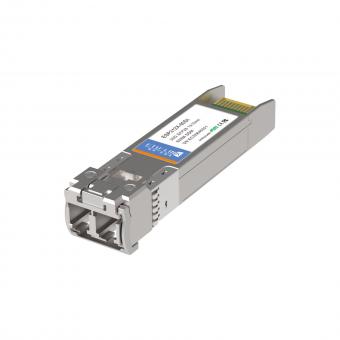
Because the SAN network uses optical fiber transmission, it can realize long-distance device interconnection. At this time, we can select the corresponding optical module according to the approximate transmission distance of the device. The 8G FC SFP+ optical module of ETU-Link can support 300m, 2km, 10km, 40km, 80km. The 8G optical module with a transmission distance of 300m needs to be used with OM3 multimode fiber patch cords, while the 8G optical module with a transmission distance of 2km-80km needs to be used with OS2 single-mode fiber patch cords.
Ⅲ. Main Advantages Of Building SAN Storage Network With 8G SFP+ FC
The advantage of using a SAN network is that the transmission speed is fast, and it can be backed up and archived for multiple or remote sites, which makes it very easy to realize physically separated storage that is not in the computer room.
Ⅳ. Frequently‑Encountered SAN Deployment Questions & Common Pitfalls
Q1: Can I mix‑use 4G /8G /16G FC SFP+ modules on same SAN fabric?
Most MDS Fibre‑Channel switches support auto speed negotiation. But it is best practice to match the same‑rate module on both link ends to avoid unstable negotiation, intermittent link bounce.
Q2: Why does 8G SFP+ FC show port‑fault after insertion?
‑ Check module EEPROM compatibility for SAN switch; generic Ethernet SFP+ cannot replace FC‑specific optical module;
‑ Verify fiber‑mode matching (multimode module ↔ multimode fiber; single‑mode module ↔ OS2 single‑‑mode fiber);
‑ Inspect LC ferrule end‑face for dust and scratches with fiber‑inspection microscope.
Q3: When to choose multimode vs single‑‑mode 8G FC SFP+?
‑ Multimode 850nm SW: Within 300‑400 meters, inside the same data‑center machine room;
‑ Single‑mode 1310/1550nm LW/ELW: Cross‑building, remote disaster‑recovery scenario over 2km.
Why Choose ETU-Link Optical Transceiver?
ETU-LINK Technology Co., Ltd. is a optical transceiver manufacturer specializing in the development, production, and promotion of high-performance fiber optic transceivers and high-speed cabling solutions.
1) Low to Mid-Speed: SFP, SFP+, SFP28, QSFP, QSFP+ series covering 1G to 40G
2) High-Speed: 100G QSFP28, 200G QSFP56, and 400G QSFP-DD/OSFP modules
3) Ultra-High-Speed: 800G OSFP DR8 and 800G OSFP 2×DR4, built on 8×100G PAM4 architecture
All ETU-LINK modules are rigorously tested for seamless interoperability with major switch and router brands. Products comply with international standards including IEEE 802.3, MSA (Multi-Source Agreement), CMIS 5.0+, and compliance CE, FCC, and RoHS.
Related Products
Last updated: Oct. 23 2026
For inquiries about our products or pricelist, please leave your information with us and we will be in touch with in 24 hours.


 13th Floor, Building 6, Honghualing Base, Nanshan Intelligent Manufacturing Base, Liuxian Avenue, Taoyuan Street, Xili, Nanshan District, Shenzhen, China
© Copyright: 2026 ETU-Link Technology CO ., LTD All Rights Reserved.

IPv6 network supported
Friendly Links:
易天官网