English




Function analysis of amplifier in medium and long distance optical module
Medium and long-distance optical modules (10G ER/80G ZR, 25G ER, 50G long-haul transceivers) integrate built-in signal amplifiers including APD avalanche photodiode and TIA transimpedance amplifier. This article compares traditional optical regenerators and internal amplifier schemes, explains amplification working principle, circuit automatic gain control and practical application value for metro, MAN and long-haul fiber transmission links.
In optical fiber communication, when optical fiber transmits optical signal, the optical signal will attenuate along the optical fiber transmission path, and the transmission distance is limited by optical fiber attenuation. In order to transmit the signal further, we need to enhance the optical signal. The traditional method of enhancing the optical signal is to use the regenerator, but it has many disadvantages, because the regenerator can only work under the determined signal bit rate and signal format, and different bit rate and signal format need different regenerators. Therefore, each channel needs a regenerator, Eventually, the cost of the network will be very high. This blog introduces the application of optical amplification technology in medium and long-distance optical modules.
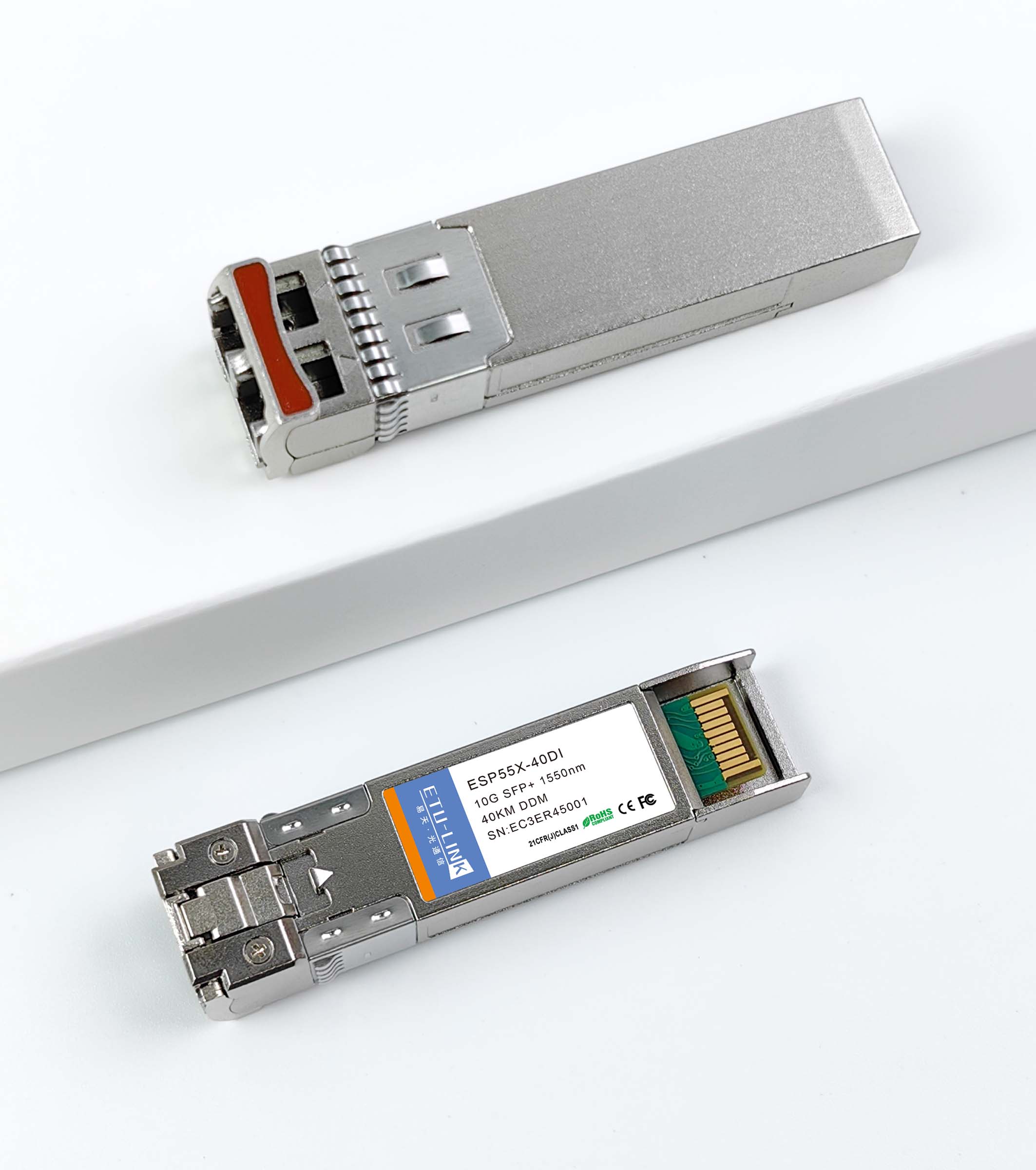
Ⅰ. What Is Optical Amplification Technology Inside Optical Modules?
Therefore, a new technology to enhance optical signal is born, which is called optical amplification technology. The basic principle of optical amplifier is to amplify optical signal by stimulated radiation or stimulated scattering. Optical amplification technology is mainly used in medium and long-distance optical modules. Since the optical signal at the transmitting end has been attenuated to a very small level after long-distance optical fiber transmission, if the attenuated optical signal is directly connected to the optical detector at the receiving end, the optical signal at the transmitting end can not be completely recovered.
Therefore, in order to improve the sensitivity of the receiving end, optical amplifiers are added in front of the optical detector at the receiving end in the optical module products to amplify the attenuated optical signal once and then connect it to the optical detector, so that the optical signal at the transmitting end can be completely recovered to achieve the purpose of medium and long-distance transmission.
Ⅱ. Internal Circuit Automatic Gain Adjustment Mechanism
Although the current production process of optical transceiver is relatively mature, the yield of optical module is still not very high, so the manufacturing cost of optical module is high.
The medium and long-distance optical module contains an optical detector and an optical signal amplification unit. The optical amplifier can be used to amplify the received optical signal, and the amplified optical signal is output to the optical detector. The controller automatically adjusts the gain of the optical amplifier according to the optical power and voltage signal sampled from the optical detector.
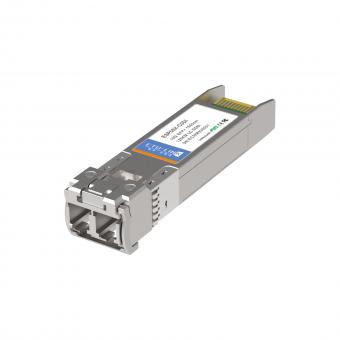
25G SFP28 ER 40KM: Industrial APD chip for 5G fronthaul long-distance base station;
Last updated: July 22 2026
Categories
New Blog
Tags
For inquiries about our products or pricelist, please leave your information with us and we will be in touch with in 24 hours.


 13th Floor, Building 6, Honghualing Base, Nanshan Intelligent Manufacturing Base, Liuxian Avenue, Taoyuan Street, Xili, Nanshan District, Shenzhen, China
© Copyright: 2026 ETU-Link Technology CO ., LTD All Rights Reserved.

IPv6 network supported
Friendly Links:
易天官网