English




Which Optical Modules Are Most In Demand For Google Data Centers?
As the AI computing power race intensifies, Google is aggressively expanding its global computing infrastructure. In this arms race, optical modules, serving as the "highway" for data transmission, have become one of the core procurement categories for Google's data center construction. Based on data from third-party organizations such as TrendForce and LightCounting, the following outlines the key areas of Google optical module demand.
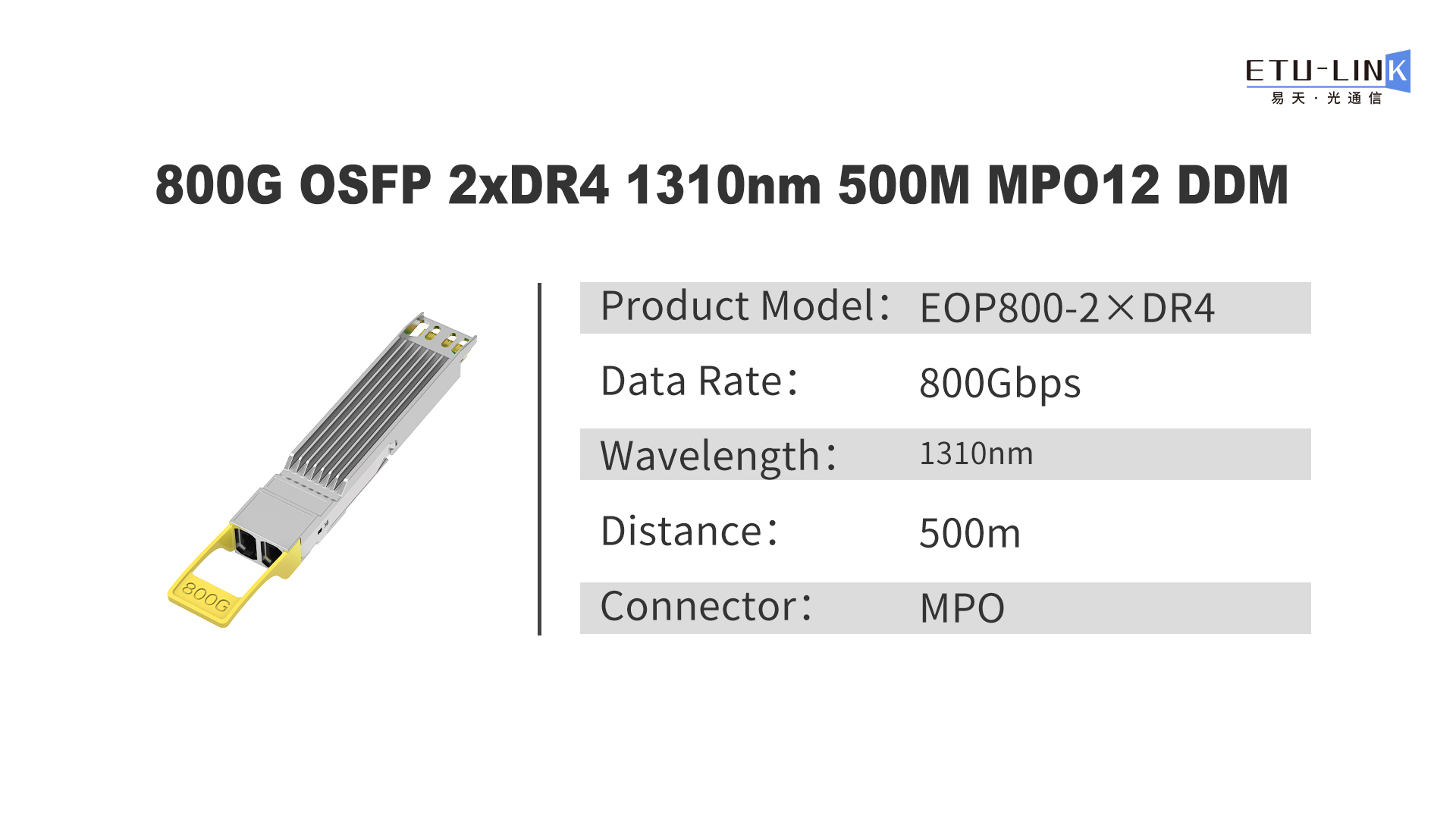
Ⅰ.Overview of Core Requirements Data for Optical Modules
| Indicator | Data | Source |
| Google TPU Shipments in 2026 | Nearly 4 million pieces | TrendForce |
| Demand for 800G and Above Optical Modules in 2026 | More than 6 million pieces | TrendForce |
| Global Shipment Share of 800G and Above Modules in 2024 | 19.50% | TrendForce |
| Global Shipment Share of 800G and Above Modules in 2026 | More than 60% | TrendForce |
| Google 800G Module Shipments in Q4 2023 (Quarter-over-Quarter) | Doubled increase | LightCounting |
| Google 800G Module Shipments in Q4 2023 (Year-over-Year) | 30-fold increase | LightCounting |
| Google Total Optical Module Procurement Volume in 2025 | About 3.5 million pieces | —— |
TPU Generations
Scale Up (ICI) Network
Scale Out (DCN) Network
TPU V8
1.6T optical module
800G NIC
TPU V7
Mixed use of 800G/1.6T
400G NIC
TPU V6
Mixed use of 400G/800G
—
With the increased shipment share of the new TPU version in 2026, demand for 1.6T and 800G will be significantly boosted.
Suppliers
800G Market Share
1.6T Position
Leading optical module manufacturer in Suzhou
50%-70%
Exclusive Supplier
Leading optical module manufacturer in Chengdu
20%
Already Entered the Supply Chain
Both combined
Nearly 80% of orders
——
A leading Suzhou-based optical module manufacturer has completed joint testing with Google on its 1.6T optical modules and is expected to enter mass production in 2025. Market research data indicates that Google's total demand for 1.6T optical modules in 2026 is projected to be between 3 million and 4 million pieces .
IV. Optical Module Technical Architecture Parameters
The core of Google Apollo OCS all-optical network technology lies in the use of micro-mirrors (MEMS) to directly connect data fibers, avoiding the energy consumption and latency caused by the repeated switching between "optical" and "electrical" in traditional technologies. A single OCS switch consumes only about 100 watts, compared to 3,000 watts for a traditional switch, reducing power consumption by approximately 95%. More importantly, this architecture gives Google tremendous upgrade flexibility—if bandwidth needs to be increased from 800G to 1.6T in the future, only the high-speed optical modules need to be replaced, without having to rebuild the entire system .
Summary
Google data center demand for optical modules is highly focused on two speed levels: 800G and 1.6T. 800G has already entered a phase of large-scale deployment, while 1.6T is accelerating its growth. With the continued expansion of TPU clusters and the advancement of OCS all-optical network deployment, this demand trend is expected to remain strong in the coming years.
Data source:
1. https://www.trendforce.com.cn/presscenter/news/20260210-12920.html
2. https://www.trendforce.com/presscenter/news/20260210-12919.html
3. https://www.lightcounting.com/newsletter/chinese/march-2024-quarterly-market-update-288
Categories
New Blog
Tags
For inquiries about our products or pricelist, please leave your information with us and we will be in touch with in 24 hours.


 13th Floor, Building 6, Honghualing Base, Nanshan Intelligent Manufacturing Base, Liuxian Avenue, Taoyuan Street, Xili, Nanshan District, Shenzhen, China
© Copyright: 2026 ETU-Link Technology CO ., LTD All Rights Reserved.

IPv6 network supported
Friendly Links:
易天官网