English



The Difference Between Optical Modules and Fiber Optic Transceivers
Optical modules and fiber optic transceivers are both important devices in fiber optic communication systems, is there any difference between them? How to choose? This article will introduce the difference between the two and the precautions to be taken when connecting.
This article systematically distinguishes optical modules (SFP/SFP+/QSFP) and standalone fiber optic media transceivers from core definition, hardware structure, port design, functions, cost and application scenarios. It also lists complete interconnection matching rules and engineering selection suggestions for network engineers, system integrators and security monitoring project suppliers.
I. What Is The Core Definition Of Optical Module & Fiber Optic Transceiver?
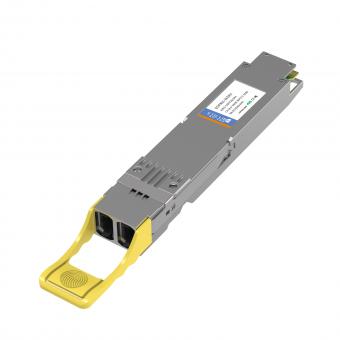
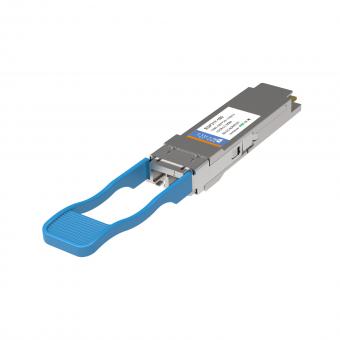
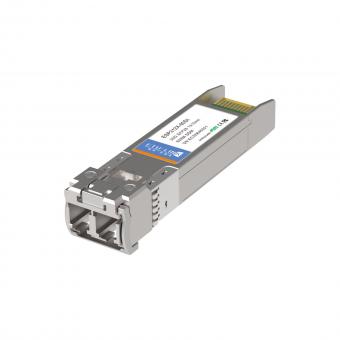
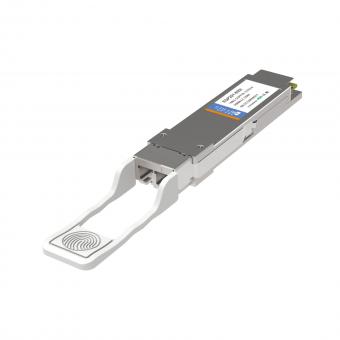
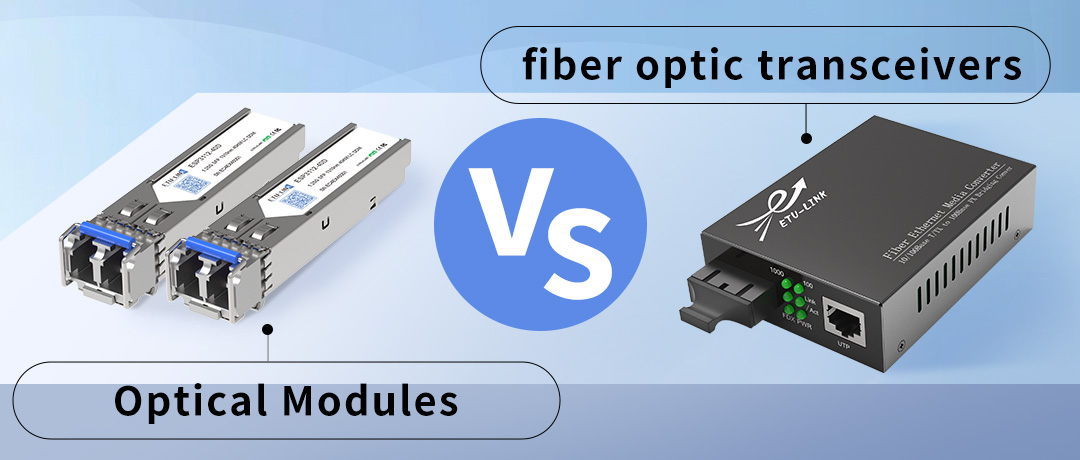
1) Optical module: belongs to a pluggable photoelectric conversion module, it is designed to be inserted into the corresponding slot network equipment, such as switches, routers, etc., is a key component of the network equipment to realize the optical communication function, its own no independent complete shell packaging, must rely on the main body of the equipment.
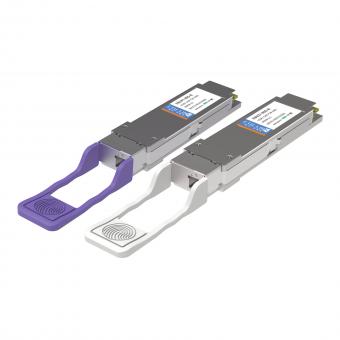
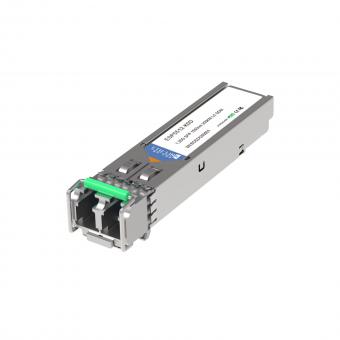
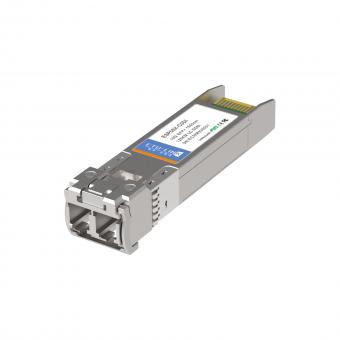
Optical modules (also called pluggable transceivers) include SFP, SFP+, SFP28, QSFP+, QSFP28 packages. They have no independent power supply circuit or RJ45 electrical port, and must obtain power, signal processing and management channels from the host switch/router/NIC cage. Common built-in chips: TOSA laser transmitter, ROS optical receiver, DDM diagnostic circuit, supporting hot swap without device restart.
2) Fiber optic transceiver: is an independent and complete network transmission equipment, has an independent shell, power supply system, can be placed on the desktop, machine room racks, do not rely on other equipment can also be completed independently of the photoelectric conversion and data transmission work.
Fiber optic transceivers are also named fiber media converters. Equipped with independent DC power adapter, RJ45 copper port and fixed/SFP fiber port integrated in one metal casing. Unmanaged and managed two versions are available; managed types support VLAN, LFP link fault pass-through and remote monitoring, specially used for old equipment without optical expansion slots
II. Differences In Port & Connection Modes
1) Optical Module: Optical ports are generally used for docking optical fibers, and electrical ports are connected to the corresponding interfaces of switches, server NICs and other devices. Optical modules and devices are tightly connected to the slots through gold fingers, which make the connection solid and precise.
Electrical interface of optical module: Gold finger pin contact with switch cage; Optical interface: LC/SC duplex simplex port directly plug fiber patch cord. No external network cable required between module and host, high integration, zero extra wiring clutter inside cabinet.
2) Fiber optic transceiver: the device is equipped with optical and electrical ports on both ends, the optical port is connected to the optical fiber, the electrical port is connected to the Ethernet cable, the use of Ethernet cables to dock switches, routers, computers and other devices, the connection is more flexible and diverse.
Typical port layout: One RJ45 port for Cat5e/Cat6 network cable, one SC/LC fixed optical port or detachable SFP slot. Need two sections of wiring: Fiber jumper on optical side + copper network cable on electrical side, suitable for scattered monitoring points without rack-mounted switches.
III. Functional characteristics
1) Optical Module: Functions focused on the conversion of photoelectric signals, in order to adapt to different transmission distances, rates, wavelengths, derived from a number of types, such as the transmission distance is as short as a few dozen meters, as long as a hundred kilometers; rate covers 1G, 10G, 25G, 40G, 100G, 400G and other different standards.
Core extra functions of optical modules: Built-in SFF-8472 DDM/DOM real-time monitoring, support reading Tx/Rx optical power, temperature, laser bias via switch CLI; Diversified specifications: SR multimode, LR/ER/ZR single-mode, BiDi single fiber, CWDM/DWDM colored optical modules, industrial RGD wide temperature versions, covering data center 400G high-speed interconnection.
2) Fiber optic transceiver: In addition to the basic photoelectric conversion, often also integrates some simple network management functions, such as link status monitoring, indicator lamps intuitive display of the work status, etc., but also able to support different rates of adaptive, convenient and fast network formation.
IV. Application Scenarios
1) Optical Module: Mainly used in medium and large-scale data centers, enterprise-level network switches, high-end servers for internal fiber-optic link expansion, with the core network equipment to achieve high-speed transmission of massive data.
Applicable scenarios: Cloud data center ToR/Spine switch interconnection, campus core aggregation switches, 5G BBU equipment, enterprise core routers, storage SAN network, high-density rack server uplink; Single cabinet can deploy dozens of SFP+ ports to improve wiring density and reduce power consumption.
2) Fiber optic transceiver: more focused on small office space, campus network, security monitoring systems such as this scenario, to meet the distance is slightly shorter, the network structure is relatively simple fiber optic network set up to complete the basic needs of photoelectric conversion and network access.
Q: Can optical modules be interconnected with fiber optic transceivers?
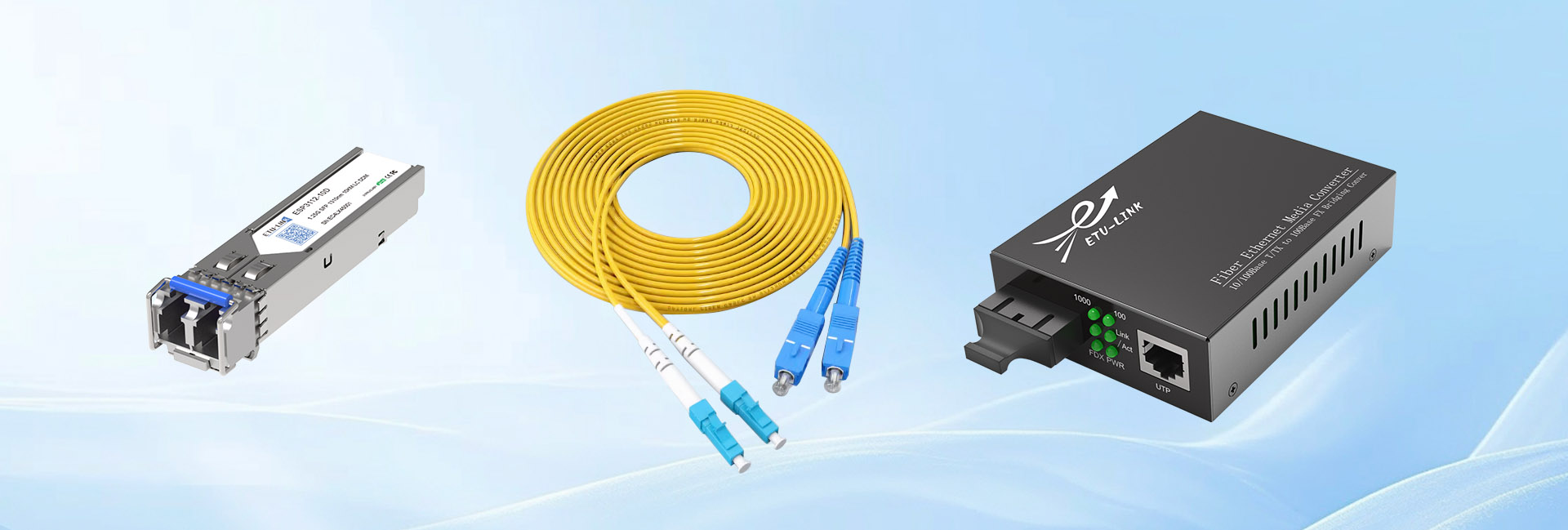
The answer is yes. However, the following conditions need to be met:
1) Transmission rate matching: the transmission rate of optical modules and fiber optic transceivers must be the same. For example, 100 megabit optical module should be matched with 100 megabit fiber optic transceiver, and gigabit with gigabit.
2) Fiber Mode Matching: Fiber modes need to strictly correspond. Single-mode optical modules must be connected to single-mode fiber optic transceivers, and multi-mode matches multi-mode.
3) Matching wavelength and transmission distance: the working wavelength and transmission distance of optical modules and fiber optic transceivers need to be consistent.
Extra interconnection rules to avoid link failure:
1. BiDi single fiber equipment must use paired TX/RX wavelength group (A end 1310 / B end 1490 cannot mismatch);
2. OM3/OM4 multimode fiber only matches 850nm SR modules, OS2 single fiber only matches 1310/1550nm long-distance modules;
3. Transmission distance of fiber cable cannot exceed the minimum rated distance of two ends equipment, otherwise serious packet loss occurs;
4. Do not mix industrial and commercial temperature products in ultra-low/high temperature outdoor environments, which easily causes unstable optical power.
Q: Choose Optical Module Or Fiber Transceiver?
1. Choose Optical Module:
Newly built data center / enterprise core switch room with SFP/SFP+ uplink slots;
Need 25G/40G/100G high-speed fiber interconnection;
Require DDM optical power real-time monitoring for daily operation maintenance;
Centralized rack wiring, pursue high port density and low power consumption.
2. Choose Fiber Optic Transceiver If
Old 10/100M switch without optical expansion port needs fiber extension;
Scattered monitoring cameras, independent workshop equipment single-point fiber access;
Temporary network transformation project, unwilling to replace original electrical network equipment;
Small quantity decentralized deployment without unified cabinet management.
In summary, optical modules and fiber optic transceivers differ significantly in terms of conceptual nature, port type, functional characteristics and application scenarios. Although they have their own characteristics, they can be connected under specific conditions, providing more flexibility for the construction of fiber optic communication systems. In practical application, the differences between the two should be considered according to specific network requirements, transmission distance, rate requirements and other factors, reasonable selection and use, in order to achieve efficient and stable fiber-optic communication network, ETU-LINK Optical Communications, as a professional manufacturer of optical modules, support for the provision of 1G-400G optical modules and other communication products, users are welcome to come to consult.
ETU-LINK complete product lineup:
1.Optical Modules: SFP/SFP+/SFP28/QSFP+/QSFP28 1G~400G series, commercial / industrial temperature, BiDi / CWDM / DWD full specifications, compatible Cisco/Huawei/H3C/Arista switches;
2.Fiber Media Transceivers: 100M / Gigabit unmanaged & rack-mounted managed fiber converters, fixed SC or hot-plug SFP slot models, single/double fiber optional;
3.Matching accessories: LC/SC/MPO fiber patch cords, passive DAC/AOC cables, CWDM MUX multiplexers, cleaning tools.
All products pass real machine aging test and long-term stability verification, supporting OEM customized labeling and EEPROM modification.
Last updated: August 6 2026
Categories
New Blog
Tags
For inquiries about our products or pricelist, please leave your information with us and we will be in touch with in 24 hours.


 Factory: Right Side Of 3rd Floor, No. 102 Building, Longguan Expressway, Dalang Street, Longhua District, Shenzhen
Office: Floor 4, Building 4, Nanshan Yungu Phase ll, Taoyuan Community, XiliStreet,Nanshan District, Shenzhen
© Copyright: 2026 ETU-Link Technology CO ., LTD All Rights Reserved.

IPv6 network supported
Friendly Links:
易天官网