English



What do the G port, F port, E port and S port of the switch mean?
When selecting or configuring a network switch, you often encounter ports labeled G, F, E, and S. Understanding the differences between these port types is essential for proper network design, cable selection, and optical module compatibility. Below, we break down each port type in detail.
1. What Is an S Port on a Switch?
S port is fully called serial interface, also known as high-speed asynchronous serial port. It is mainly used when connecting router and router. You can use commands to set bandwidth.
S port is widely used for inter-router communication and network management configuration in enterprise and telecom network environments.
E port is an Ethernet interface, called Ethernet interface. It is mainly used to connect Ethernet (local area network), which can be connected with ordinary twisted pair.
E port provides basic Ethernet access for terminal devices and is the most common interface for LAN access.
3. What Is a Console Port and How Is It Used?
The Console port is a control interface used to debug, configure, and manage the switch or router locally. Some devices also feature an AUX (auxiliary) interface, which serves as an additional control port for remote management or backup access.
4. What Is a G Port (Gigabit Port)?
In addition, G port are gigabit Ethernet interfaces, which are connected to Ethernet.
The full English name of G port is Gigabitethernet , which is a gigabit port. A gigabit port can be either an electric port or an optical port. If it is an electric port, you only need to access the network cable. If it is an optical port, you need to insert the optical module and then access the optical fiber.
G port supports 1000Mbps high-speed transmission, widely used in gigabit switches, backbone networks, and data center connections.
5. What Is F Port on a Switch?
F port is FastEthernet interface and fast Ethernet port, also known as 100M port.It is mainly connected to Ethernet (local area network). It is mainly used to connect switches or computers. It can be connected with ordinary twisted pair. The default speed is 100Mbps.You can use the command to limit the speed, but not more than 100Mbps.
F port is suitable for small and medium-sized LANs, office networks, and terminal access with 100Mbps bandwidth requirements.
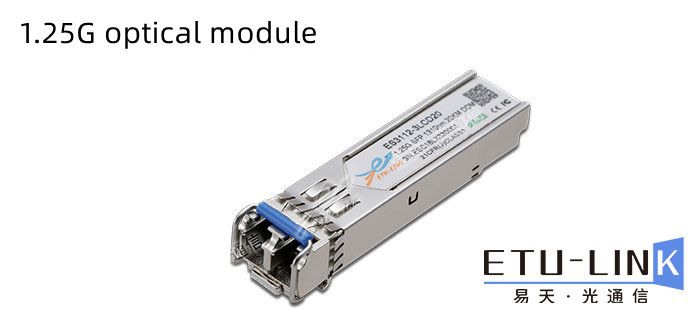
6. What Gigabit Optical Modules Are Used for Gigabit Optical Ports?
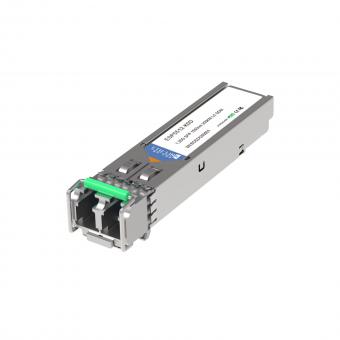
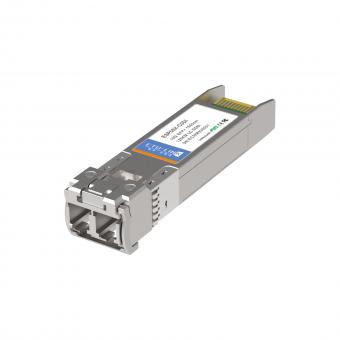
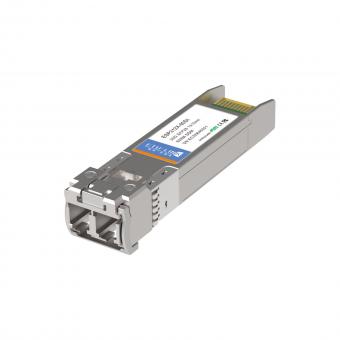
Gigabit optical port can access gigabit SFP optical module. Gigabit optical module is a very mature series of products. The common transmission rate is 1.25G, 2.5G, etc. and the package type is SFP. There are many models of gigabit optical modules. The following ETU-LINK will introduce the types of gigabit optical modules in detail.
Gigabit optical modules can be divided into two categories: single fiber optical modules and dual fiber optical modules.
Single fiber refers to that there is only one interface and the transceiver is integrated. Only one optical fiber can be used for transmission. The interface type of gigabits simplex optical modules is SC / LC, and the optical fiber type is single mode. It can be transmitted up to 200km by matching OS2 single mode optical fiber patch cord.
Dual fiber refers to two interfaces, one receiving and one transmitting, which need to use two optical fibers for transmission. The interface type of dual fiber optical module is duplex LC, and the optical fiber types are single mode and multimode. The gigabit multimode optical module is used together with OM2 multimode optical fiber patch cord. The transmission distance of the conventional model is 550m, and the longest transmission distance can reach 2km. The gigabit single mode duplex optical module can be used together with OS2 single mode optical fiber patch cord , and the maximum transmission distance can reach 160km.
Gigabit optical modules are mainly used in gigabit switches, gigabit routers, servers, firewalls and other devices. Of course, they can also be used in storage devices, because gigabit optical modules are not only compatible with Ethernet standards, but also compatible with fibre channel standards.
At present, ETU-LINK has a full range of optical modules, which is the preferred product for optical interconnection between data center computer rooms and buildings.
Last updated: March 26, 2026
For inquiries about our products or pricelist, please leave your information with us and we will be in touch with in 24 hours.


 13th Floor, Building 6, Honghualing Base, Nanshan Intelligent Manufacturing Base, Liuxian Avenue, Taoyuan Street, Xili, Nanshan District, Shenzhen, China
© Copyright: 2026 ETU-Link Technology CO ., LTD All Rights Reserved.

IPv6 network supported
Friendly Links:
易天官网