English



What is the difference between male and female MPO connector? What kind of Optical module is used?
With the rapid development of the Internet, traffic has increased rapidly, and data centers have higher requirements for speed and bandwidth. Many on-site engineers and procurement staff ask: What are male and female MPO connectors? How to distinguish them in appearance? What matching rules should be during connection? Which high-speed optical modules are equipped with MPO interfaces? This article details the differences, matching rules, applicable modules and wiring precautions of MPO male and female connectors.
In the 40G/100G data center cabling scheme, parallel transmission technology has made multi fiber MPO patch cord widely used. The commonly known MPO patch cord is actually composed of OM3/OM4 multimode fiber patch cords or single mode fiber patch cords with MPO connectors.
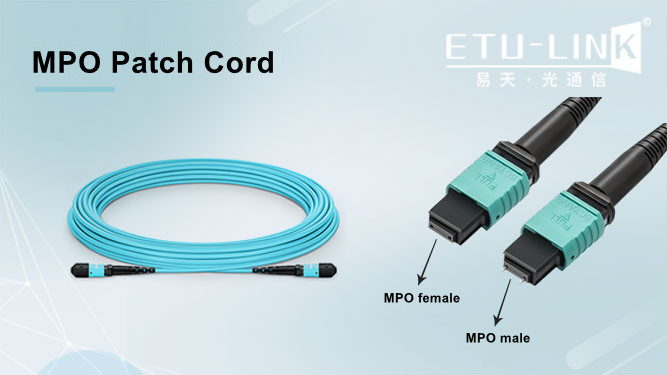
Ⅰ. How to Distinguish Male and Female MPO Connectors?
There are many types of MPO connectors, but we can distinguish them based on the number of fiber cores (number of fiber arrays), polarity, male and female connectors, and end face type (PC or APC). In this blog, ETU-LINK will separately explain
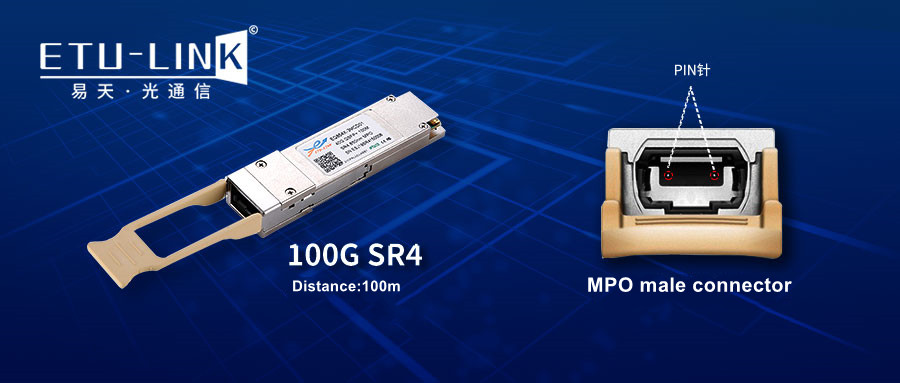
the knowledge of male and female connectors. In fact, the male and female heads can be distinguished from each other by their appearance. The male head clearly has two guide pins (PIN pins), while the female head does not. The connection between MPO connectors is precisely aligned through PIN pins, and the two MPO connectors connected to each other must be one male and one female.
The guide pins of male MPO connectors play a role in positioning and anti-offset during docking, which can effectively reduce insertion loss caused by fiber core misalignment. It is strictly forbidden to connect male-to-male or female-to-female MPO connectors. Wrong docking will damage the PIN pins and internal fiber cores, resulting in link failure or permanent damage to the connector.
Ⅱ. Which Optical Modules Match MPO Female Connectors?
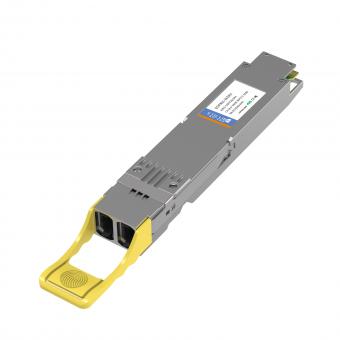
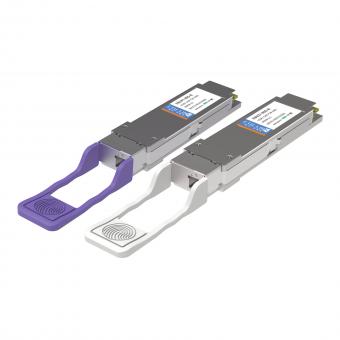
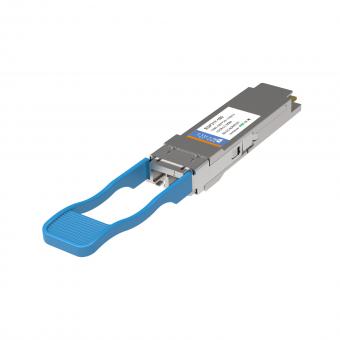
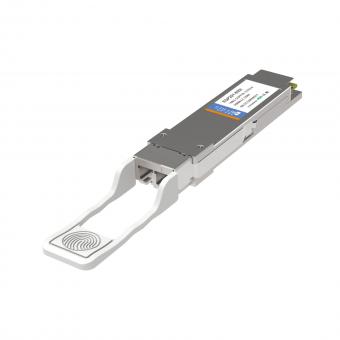
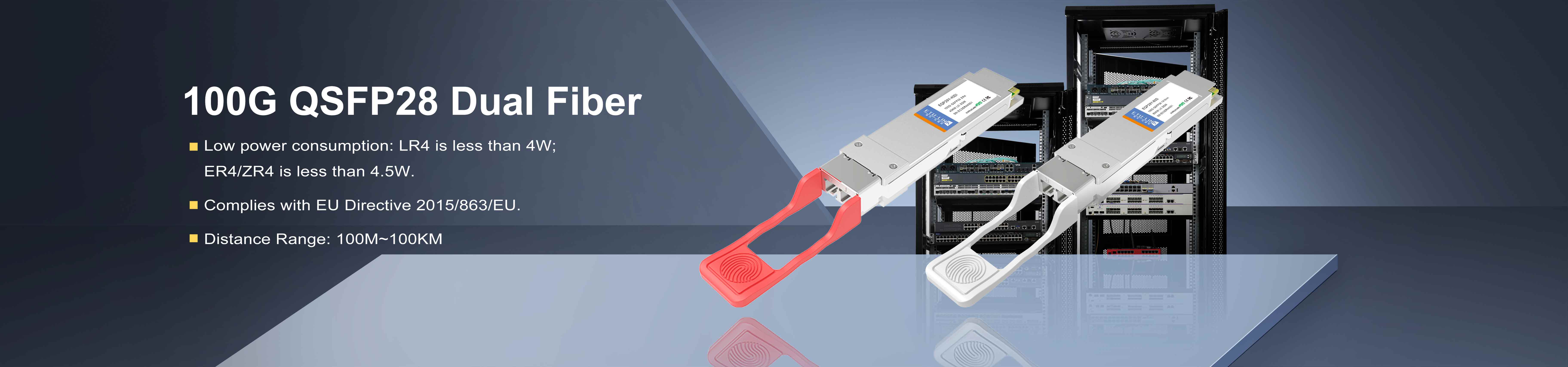
Female connector is usually used in 40G/100G SR4 multi-mode parallel Optical module. Because the MPO interface of the Optical module uses male connector, it needs to use MPO female connector for connection. When connecting the 40G/100G SR4 multimode Optical module, we need to connect the 12 core MPO multimode OM3/OM4 optical fiber (polarity B). Most mainstream high-speed parallel optical modules such as QSFP+ and QSFP28 adopt built-in male MPO interfaces by default. Therefore, the matched MPO patch cord, trunk cable or breakout cable must be equipped with female connectors. Besides 40G/100G SR4 multimode modules, 200G/400G SR8/DR8 high-speed optical modules also follow this matching rule.
Ⅲ. Additional Classification of MPO Connectors
In addition to male and female distinction, MPO connectors are also divided by fiber count, end face type and polarity in actual engineering deployment, which are key factors for normal link operation:
Fiber Core Count: Common specifications include 8-core, 12-core, 16-core, 24-core. 12-core is the most widely used for 40G/100G SR4 links; 24-core is mainly for 400G high-speed transmission.
End Face Type: PC (Physical Contact) is used for general data transmission; APC (Angled Physical Contact) is used for CATV and signal reflection sensitive scenarios.
Polarity: Divided into Type A, Type B, Type C according to TIA-568 standard. Type B is the mainstream choice for 40G/100G SR4 parallel optical links, which can ensure correct Tx/Rx signal pairing.
The above is ETU-LINK's difference between male and female MPO connectors and how to use them. If need more information about the optical fiber patch cord and Optical module, can read the previous blogs to help you become an expert in the optical communication industry.
To sum up, the core identification point of MPO male and female connectors is the guide PIN pins. All mainstream MPO interface optical modules adopt male ports, so female MPO cables must be matched. When deploying 40G/100G/400G high-speed links, you also need to reasonably select fiber core count, fiber type and polarity to ensure stable and reliable network operation.
ETU-LINK provides full-series MPO patch cords, trunk cables, breakout cables and matching 40G/100G/400G MPO interface optical modules, with complete specifications and full compatibility with mainstream switch brands, to provide one-stop cabling solutions for data centers.
Last updated: June 15, 2026
Categories
New Blog
Tags
For inquiries about our products or pricelist, please leave your information with us and we will be in touch with in 24 hours.


 Factory: Right Side Of 3rd Floor, No. 102 Building, Longguan Expressway, Dalang Street, Longhua District, Shenzhen
Office: Floor 4, Building 4, Nanshan Yungu Phase ll, Taoyuan Community, XiliStreet,Nanshan District, Shenzhen
© Copyright: 2026 ETU-Link Technology CO ., LTD All Rights Reserved.

IPv6 network supported
Friendly Links:
易天官网