English



What are the differences between long-range and short-range optical modules?
In a corner of the data center server room, rows of optical modules are working silently. They look almost identical, but their internal structures are vastly different. Some are responsible for connections of a few meters between server racks, while others bear the heavy responsibility of spanning tens of kilometers across a city. This difference is the most fundamental dividing line in the field of optical communication.
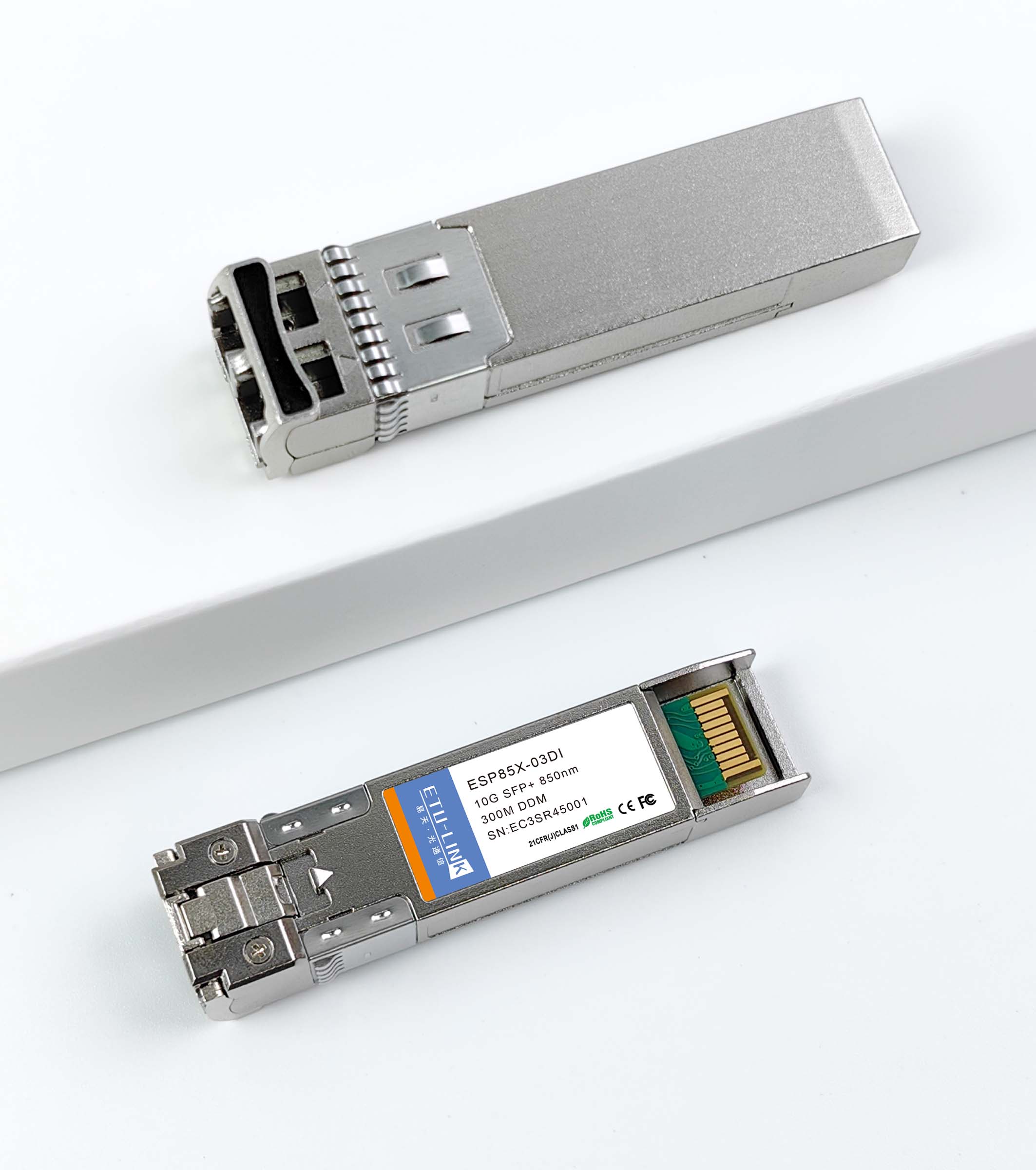
From the perspective of physical layer architecture, the fundamental difference between long-distance and short-distance optical modules stems from the divergence in two core dimensions: dispersion management mechanisms and light source coherence. Short-distance communication typically employs multimode fiber paired with a VCSEL laser, with the operating wavelength locked within the 850nm window. The underlying logic of this combination is to fully utilize the large numerical aperture of multimode fiber, reducing connection accuracy requirements and thus controlling the overall system cost. The direct modulation characteristics of VCSELs simplify circuit design, eliminating the need for complex driver architectures.
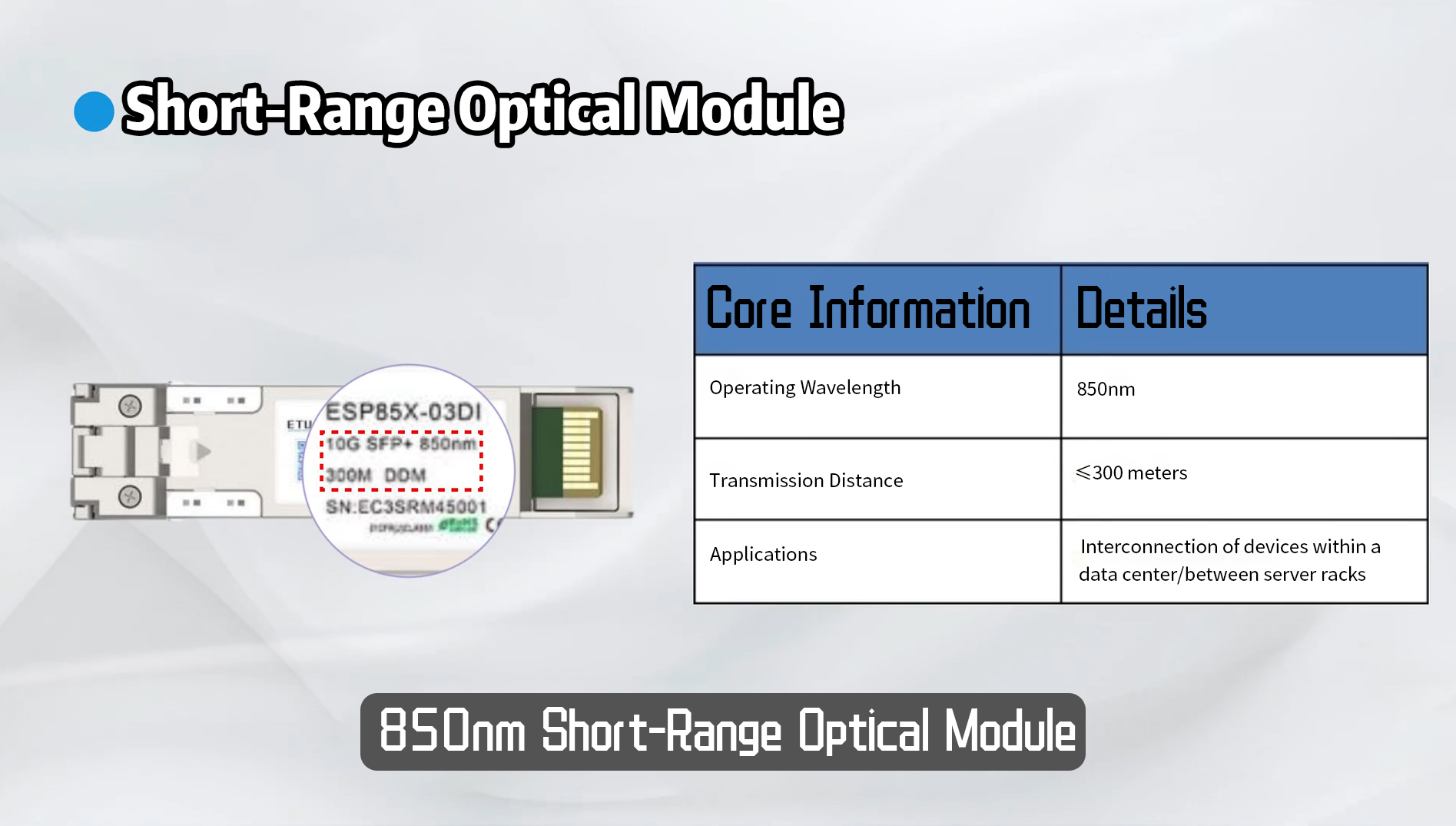
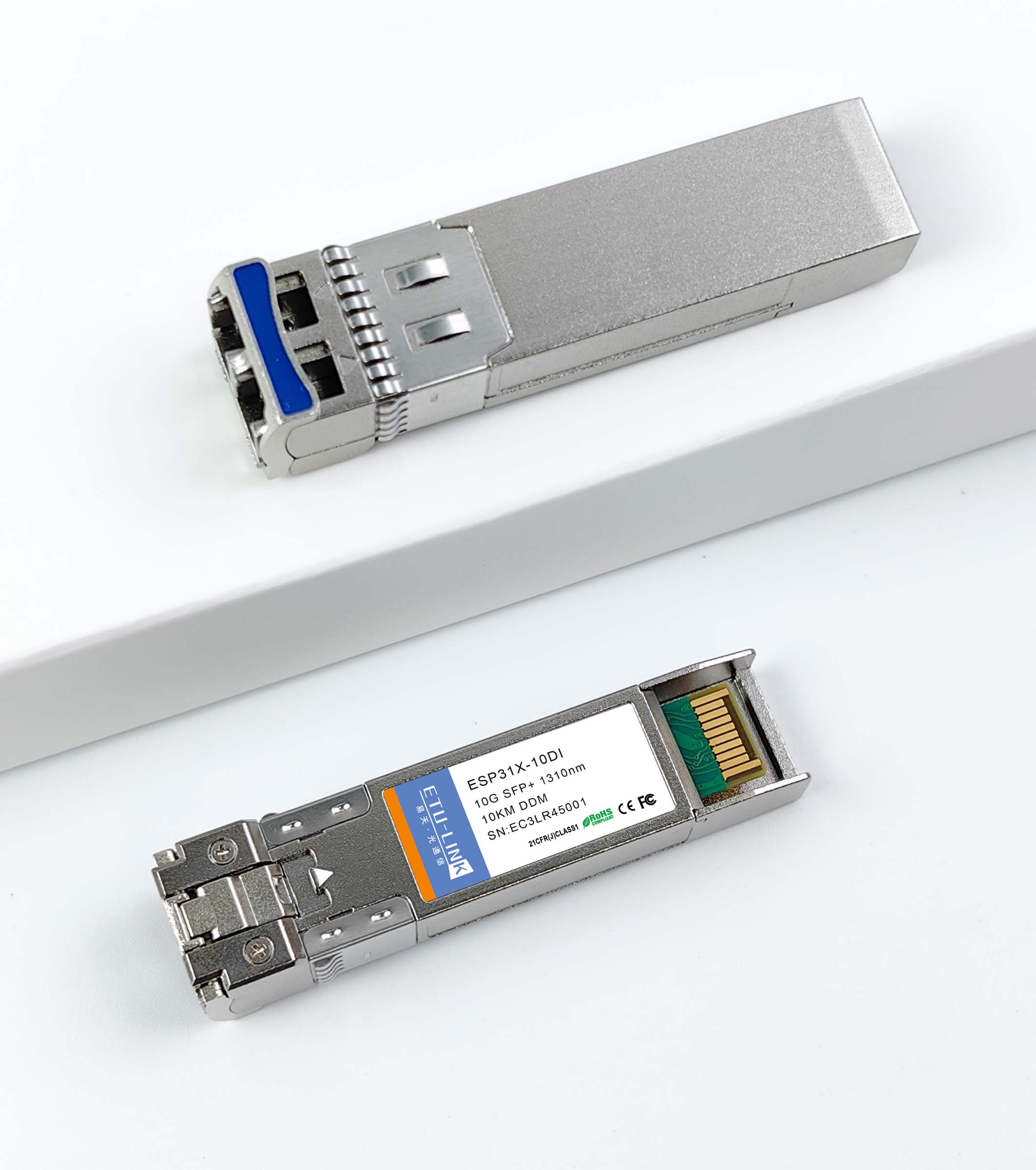
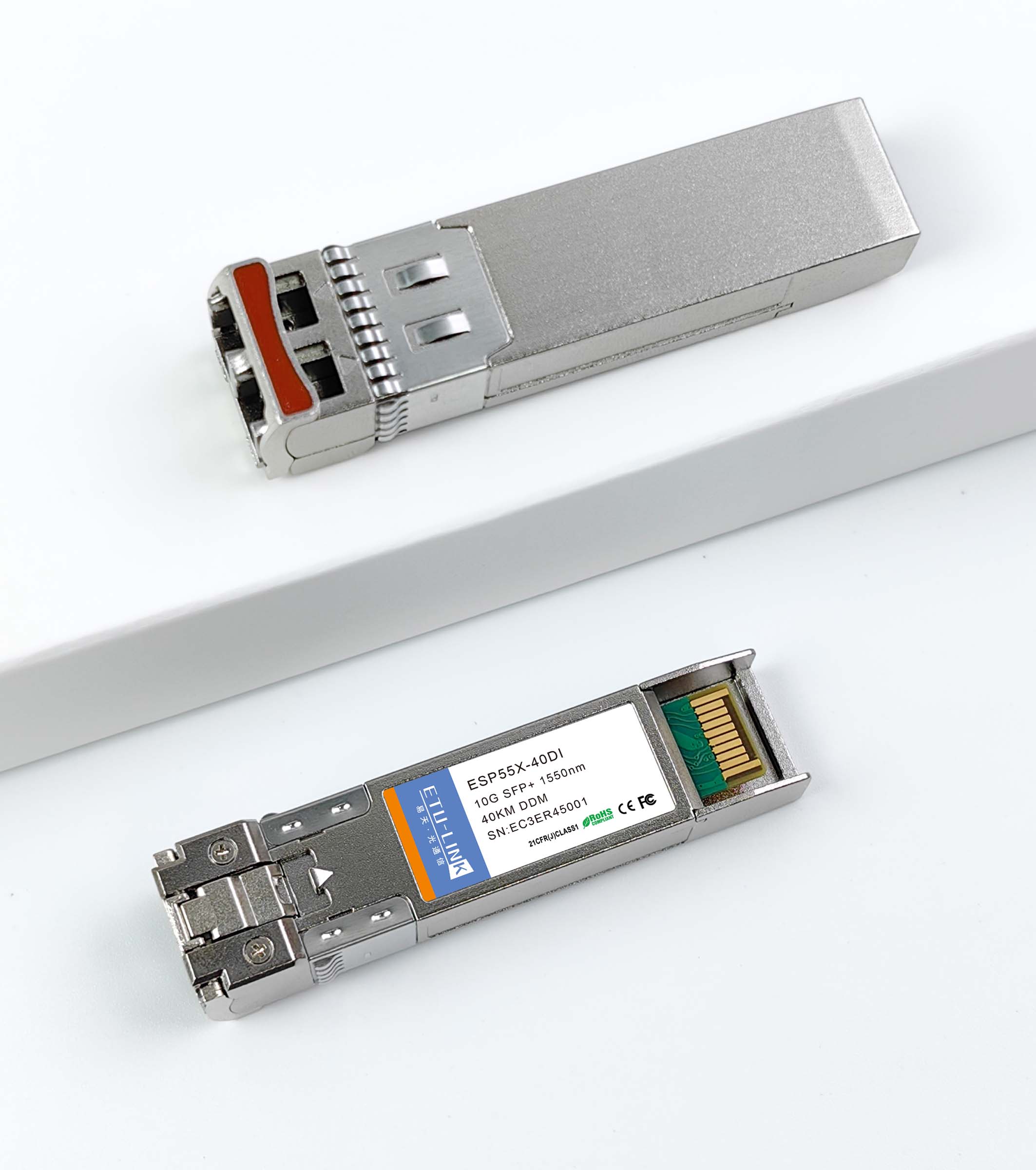
Long-distance modules have taken a completely different technological path. The 1550nm window has become the mainstream choice, and single-mode fiber has become essential in replacing multimode fiber. Behind this wavelength selection is the lowest attenuation region of silica fiber, which allows signals to be transmitted over longer distances without the need for repeaters. More importantly, long-distance modules generally employ external modulation technology and coherent reception schemes, loading information onto the phase of light rather than just its intensity.
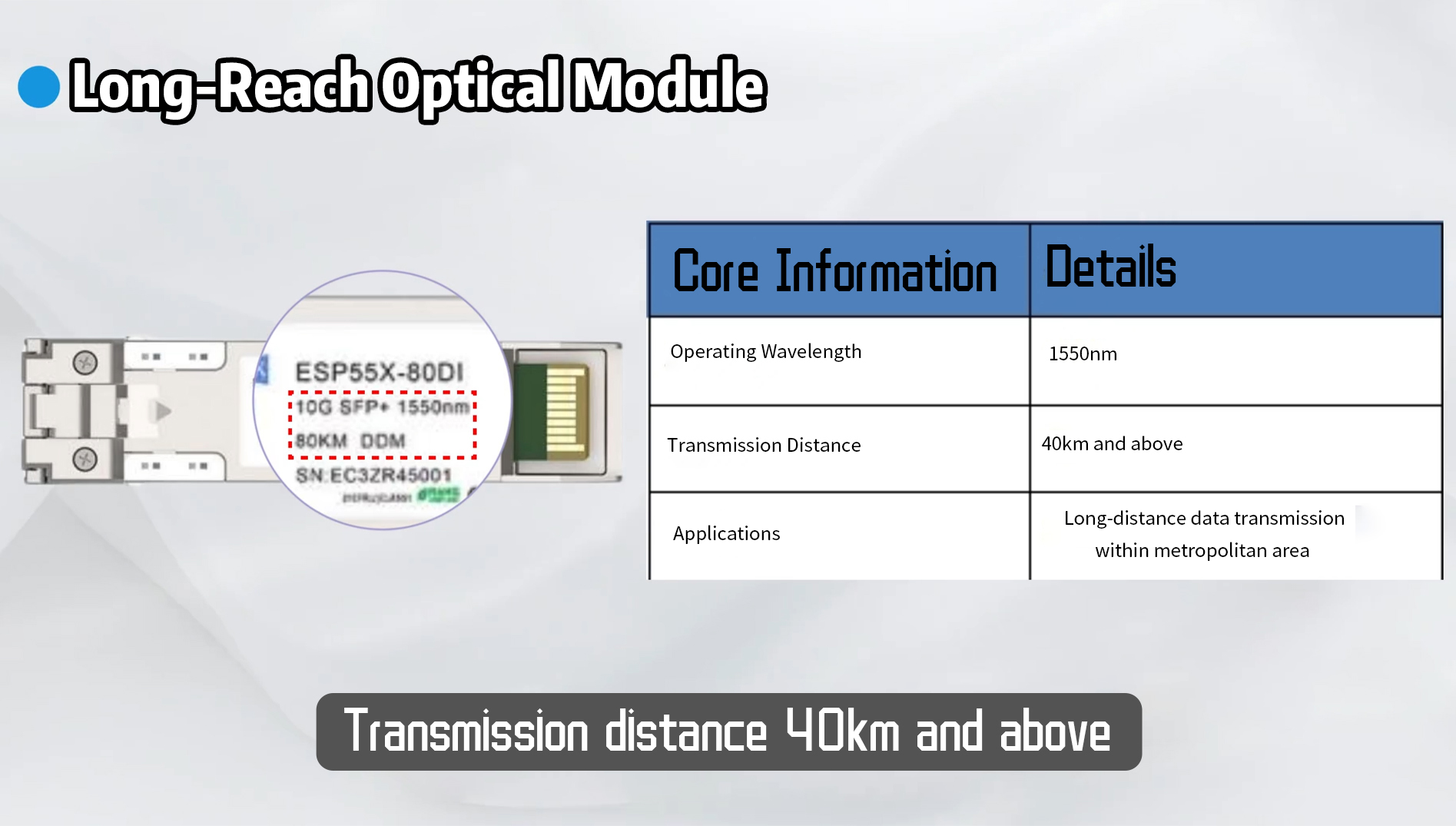
At the light source component level
Yhe distinction between Fabry-Perot lasers and distributed feedback lasers (DFB) directly defines the boundary between short-haul and long-haul transmission. Short-haul modules can use Fabry-Perot lasers, whose multimode characteristics do not cause significant dispersion penalties in short fiber transmissions. However, as the transmission distance increases, the mode allocation noise introduced by the multimodes drastically degrades the system's bit rate (BER). Long-haul modules must employ DFB lasers or even external cavity lasers to ensure single-mode operation and compress the spectral linewidth to the MHz level.
The design of photodetectors at the receiving end also differs fundamentally. Short-range modules can use simple PIN detectors, which have fast response speeds and low bias requirements. Long-range modules generally use APD detectors, utilizing the avalanche multiplication effect to improve receiving sensitivity. For ultra-long-range scenarios, a balanced detector combined with a local oscillating laser is also required to achieve coherent detection, pushing the receiving sensitivity close to the quantum limit.
The divergence in power management and thermal design is also noteworthy.
Taking 10G speeds as an example, short-range modules typically consume less than 1W, and natural convection is sufficient for heat dissipation. Long-range modules, however, can consume over 2.5W, primarily due to the digital signal processing algorithms' calculations for dispersion and nonlinearity compensation. This high power consumption necessitates the use of metal casings and thermal pads in long-range modules to ensure effective heat transfer to the system's heat dissipation surface.
The differences in application scenarios further reinforce this technological divide.
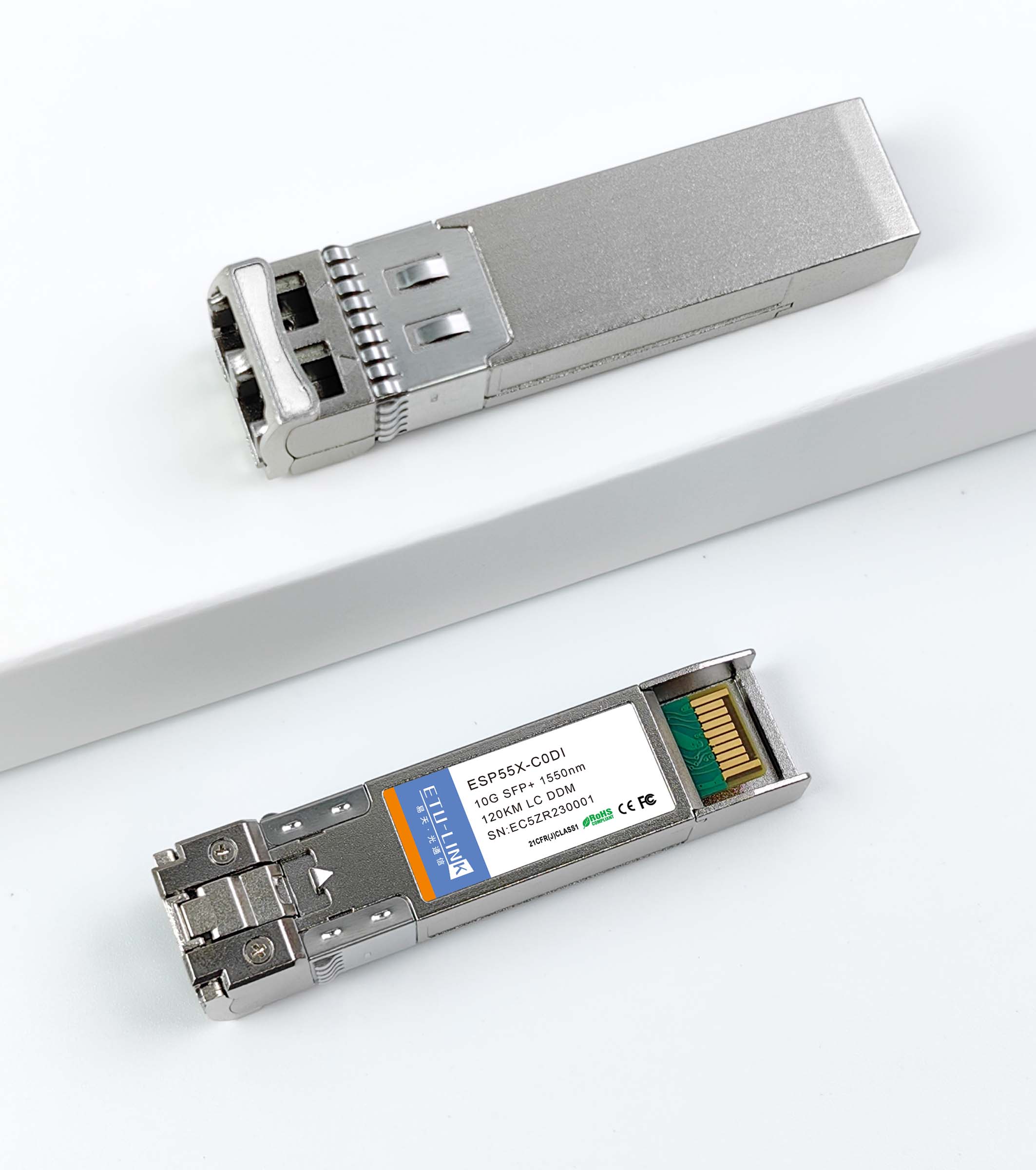
Data center internal connections prioritize high density and low power consumption, making SR and VR series modules the mainstream. However, operator backbone networks and DCI interconnects prioritize maximum transmission distance and wavelength stability, necessitating the use of ER, ZR, or even FR series solutions. The ZR+ module, which has emerged in recent years, attempts to achieve transmission speeds exceeding 80km and 400G rates through coherent technology, but its power consumption still far exceeds that of short-range modules.
Interestingly, with breakthroughs in silicon photonics integration technology, the technological gap between the two is subtly shifting. Short-range modules are beginning to incorporate silicon-based modulators to achieve higher bandwidth, while long-range modules are advancing the on-chip integration of coherent optical engines. However, this convergence is more evident at the process level; the fundamental differences at the physical layer will persist for a long time. After all, the difference between a few meters and tens of kilometers is a boundary etched by the laws of physics, which cannot be completely bridged by engineering technology.
In the world of optical modules, seemingly similar exteriors conceal vastly different cores. Understanding these differences not only helps us make informed selection decisions but also allows us to appreciate the profound shaping of technological pathways by physical laws. This is perhaps precisely the allure of optical communication.
Why Choose ETU-Link Optical Transceiver?
As a professional manufacturer with more than 12 years of deep presence in the optical communication industry, ETU-LINK specializes in full-series 10G/25G/100G/400G/800G optical modules and supporting optical communication devices. All our products have Compliant with FCC, CE and RoHS certifications, and are fully compatible with mainstream brand network equipment in the market.
We also support flexible OEM/ODM customization services to match diverse project requirements, with a leading 3-year warranty policy and fast order delivery.
Related Products
For inquiries about our products or pricelist, please leave your information with us and we will be in touch with in 24 hours.


 13th Floor, Building 6, Honghualing Base, Nanshan Intelligent Manufacturing Base, Liuxian Avenue, Taoyuan Street, Xili, Nanshan District, Shenzhen, China
© Copyright: 2026 ETU-Link Technology CO ., LTD All Rights Reserved.

IPv6 network supported
Friendly Links:
易天官网