English




What Is Happening at Global Computing Power Centers?
The Three-Stage Transition From "Data Center" to "Digital Oilfield"
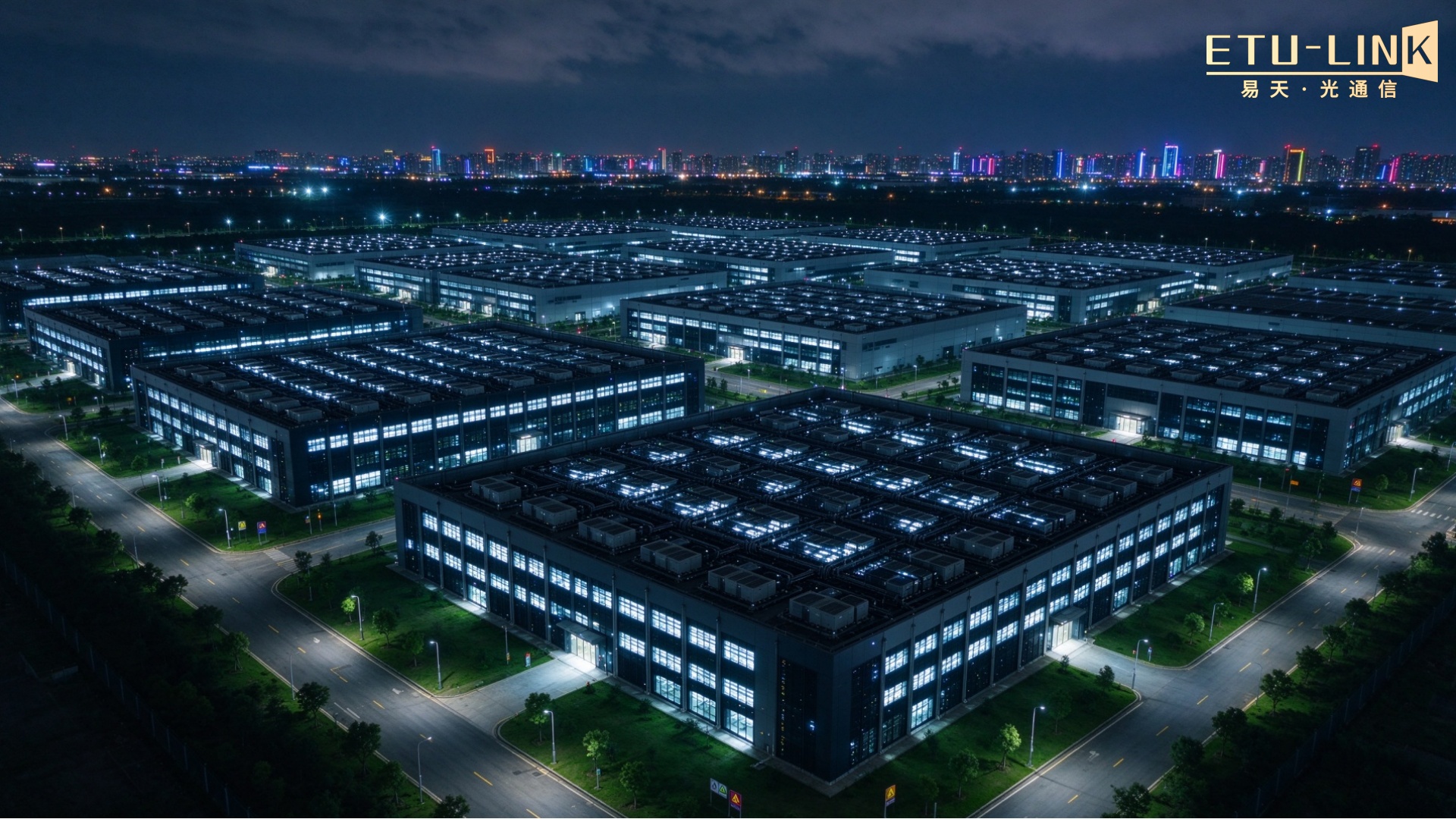
As server rooms become the "new oil fields" of the digital age, they are being redefined.
In 2026, the four tech giants Amazon, Microsoft, Google, and Meta plan to invest a total of approximately $730 billion in AI infrastructure—a figure that represents a 78% year-on-year increase and exceeds the annual GDP of many countries.
Most of this money went to the same place: Computing Power Center.
But if your impression of computing centers is still limited to "rows of servers in air-conditioned server rooms," then you might need to update your understanding. Today's computing centers are transforming from cold, impersonal IT facilities into the most critical strategic infrastructure of the AI era.
This article avoids abstract concepts and focuses on three key questions: What changes are occurring in global computing centers? What are the key variables driving these changes? And how can ordinary people assess the true trends in this field going forward?
Ⅰ. Let’s be clear: a computing center is not just a "super-sized server room".
When many people first hear the term "computing center," the image that comes to mind is a room filled with servers, a buzzing air conditioner, and maintenance personnel wearing anti-static suits.
This understanding isn't wrong, but it only gets the past tense right.
Explain this concept in three points:
1. A plain-language definition: A computing center is a dedicated infrastructure that centrally deploys computing equipment and provides data processing and AI training capabilities. Essentially, it's a "computing power plant"—except it generates computing power, not electricity.
2. Exclusions: It is not the same as a traditional IDC (Internet Data Center). Traditional IDCs mainly provide server hosting and bandwidth leasing, acting as "data warehouses"; while next-generation intelligent computing centers focus on AI model training and inference, acting as "model-making factories." The two have completely different technical architectures, power densities, and operational logics.
3. Relationships: its true importance lies in the fact that it forms the "foundation" of the entire AI industry. Without the explosion of computing power centers, large-scale model training, intelligent agent applications, autonomous driving, and scientific computing would be impossible. Computing power is becoming a fundamental public good in the digital economy, much like water and electricity.
According to data from the China Academy of Information and Communications Technology (CAICT), the number of standard server racks in use in China will exceed 13.73 million in 2025, with the growth rate rebounding directly from a low point in 2023 to 52.56%. Behind this inflection point is the signal of the shift from traditional data centers (IDC) to intelligent computing centers.
Ⅱ. Global Computing Power Landscape: A SilentGreat Spatial Migration
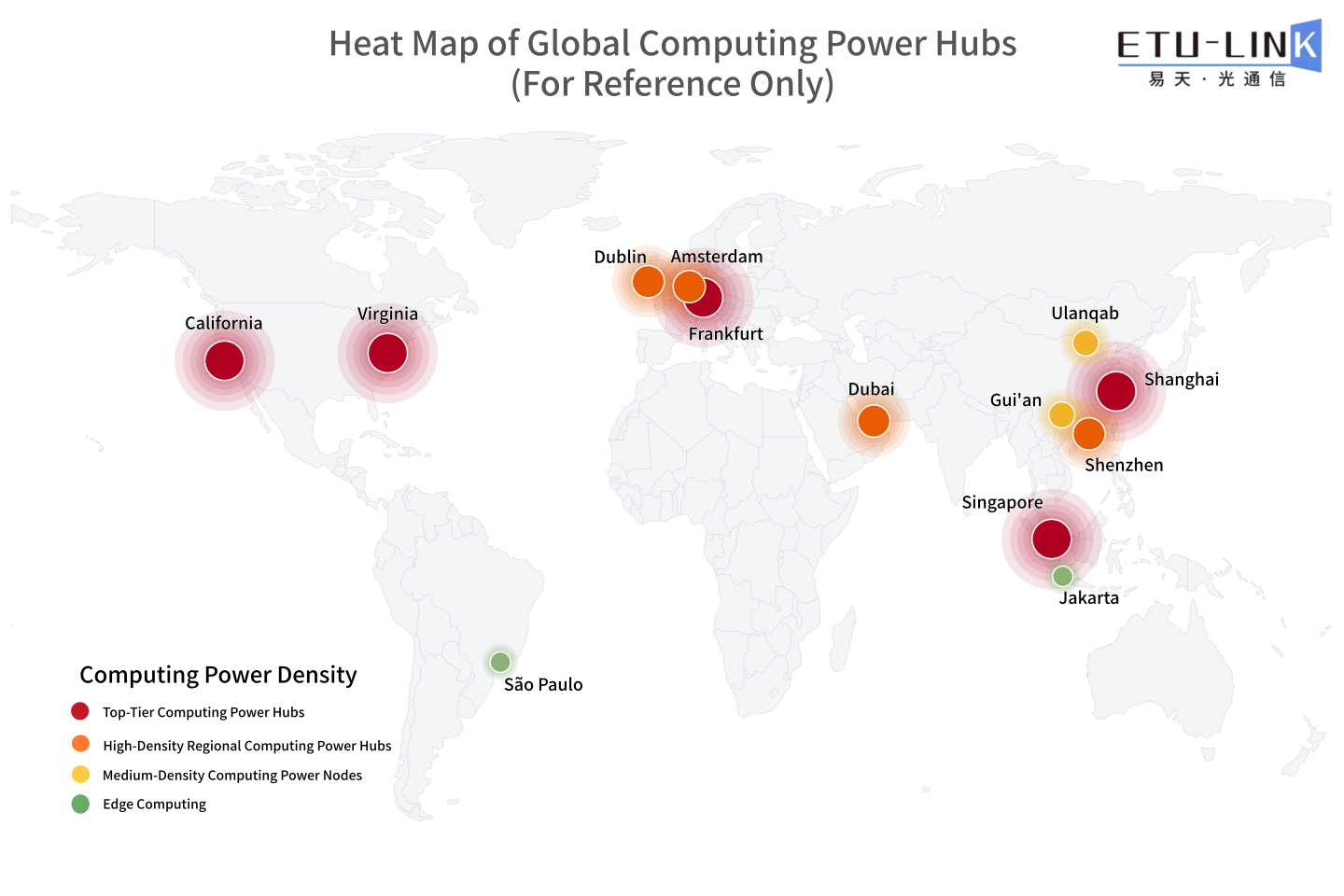
Computing power, like a population, is rediscovering its "home."
To understand the development trend of global computing power centers, we must first understand a basic pattern: global computing power resources are not evenly distributed; they are being restructured along several clear lines of logic.
1. North America Leads, Europe Follows Closely, and China Expands Rapidly.
In terms of market share, North America currently accounts for approximately 40% of the global data center market, making it the undisputed leader. It boasts the world's largest concentration of hyperscale cloud campuses—the core clusters of Amazon AWS, Microsoft Azure, and Google Cloud are all located in the United States.
Europe accounts for approximately 25.6% of the market share, with Germany, Ireland, and the UK at its core. Europe is characterized by extremely high requirements for data security and environmental sustainability, which is forcing its computing centers to adopt a lower-carbon approach.
China is the fastest growing sector. According to publicly available data from the National Bureau of Data Science, by the end of 2025, China's total intelligent computing power reached 1.59 million PFLOPS. More noteworthy is the growth rate—China's intelligent computing power is projected to reach 2576.5 EFLOPS in 2026, a year-on-year increase of 87.9%; and will reach 10524.3 EFLOPS by 2030, with a compound annual growth rate of 50.3% from 2025 to 2030.
2. The “Arms Race” Among the Four Tech Giants
If there's one most noticeable change in global computing centers, it's the speed at which tech giants are throwing money at the problem.
In 2026, Amazon plans to invest approximately $220 billion, Google (Alphabet) approximately $195-205 billion, Microsoft approximately $175 billion, and Meta approximately $130-145 billion. The four companies combined will invest approximately $730 billion, representing a 78% year-on-year increase. Goldman Sachs even predicts that by 2027, hyperscale cloud vendors' capital expenditures will approach $1.14 trillion.
Where did this money go? Most of it went into building new data centers, purchasing AI chips, and laying high-speed networks. Amazon's capital expenditures in a single quarter reached a record high, almost equivalent to the annual budget of a medium-sized country.
The logic behind this is simple: whoever controls computing power controls the "oil" of the AI era.
3. China "East-to-West Computing Resource Transfer" Project: Aligning Computing Power with Energy Resources
In China, a deeper spatial restructuring is underway.
Launched in 2022, the "East Data, West Computing" project has established eight national computing power hub nodes and ten national data center clusters. The core idea is to direct latency-insensitive computing power needs (such as AI training and offline analysis) to the west, taking advantage of the abundant wind and solar energy and cool climate of the west.
In terms of distribution, the current proportions of intelligent computing scale in the eastern, central, western, and northeastern regions are 55.9%, 10.6%, 32.6%, and 0.9% of the national total, respectively. The western region's share has exceeded 30% and is still rising rapidly.
A prime example is Zhangjiakou: as a computing power hub node in the Beijing-Tianjin-Hebei region, Zhangjiakou's total intelligent computing scale has reached 310,000 petabytes (FP16), ranking first among prefecture-level cities nationwide. The green electricity utilization rate of newly built data centers in the area exceeds 90%, relying on the abundant wind and solar power resources in the Bashang region.
Another example is Qingyang, Gansu: China Telecom's Qingyang Computing Center has achieved 100% clean energy coverage, reduced PUE to 1.192, and was selected as a National Green Data Center for 2025.
This trend is not unique to China. Globally, computing centers are shifting from being "closer to users" to being "closer to energy sources"—because electricity costs are accounting for an increasingly larger proportion of the cost structure of computing power.
Ⅲ. Technological Paradigm Revolution: From "Air Cooling for Survival" to "Liquid Cooling as an Essential Need"
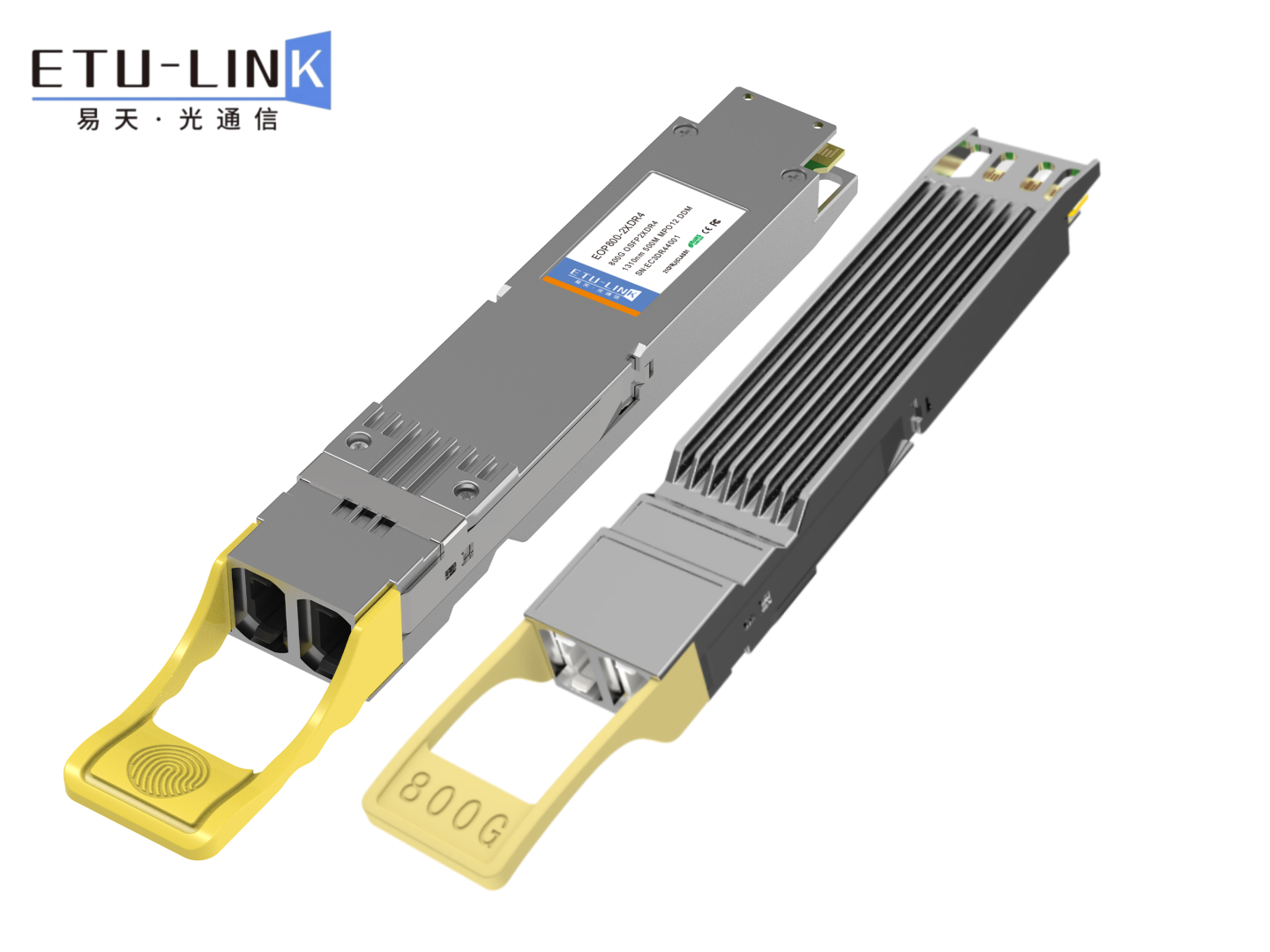
The most obvious technological change in computing centers is not the servers themselves, but their "heat dissipation methods".
1. Why Is Air Cooling Suddenly Insufficient?
In the past, data centers relied on high-powered air conditioners blowing air directly onto servers—that is, air cooling. This system worked well in the CPU era because the power consumption of a single chip was only tens to hundreds of watts.
However, with the advent of the AI era, this calculation no longer holds true. The power consumption of a single AI accelerator card has exceeded kilowatt levels, and the total power consumption of a cluster of 10,000 cards is equivalent to the electricity consumption of a small county. Continuing to use air cooling is not only inefficient in terms of heat dissipation, but the electricity costs and noise are also completely unacceptable.
As a result, liquid cooling went from being an "optional" to a "mandatory" option.
Water has approximately four times the specific heat capacity of air and more than 25 times the thermal conductivity. Liquid cooling can achieve 10 to 50 times the heat dissipation efficiency of air cooling, reducing the core temperature of a chip from over 100°C to below 60°C. According to actual measurement data from the China Academy of Information and Communications Technology (CAICT), mature domestically produced liquid cooling systems can reduce cooling energy consumption by 30%-40% compared to traditional air cooling.
2.The Liquid Cooling Market Is Booming.
Data from CCID Consulting is very telling: the domestic liquid-cooled data center market reached RMB 15.98 billion in 2025, a year-on-year increase of 45.2%; it is expected to reach RMB 23.25 billion in 2026 and exceed RMB 47 billion in 2028.
By 2026, liquid cooling was no longer just an "upgrade solution" for high-end computing clusters, but a "mandatory entry standard." Newly built high-capacity computing centers almost entirely adopted liquid cooling solutions.
3. PUE Thresholds and the Push Toward Greening
In addition to technological needs, policies are also forcing computing centers to become more green.
Power Usage Effectiveness (PUE) is a core indicator for measuring the energy efficiency of data centers—the closer the PUE is to 1, the lower the cooling and auxiliary energy consumption. The Ministry of Industry and Information Technology (MIIT) clearly requires that the PUE of data centers applying for national green computing facilities must reach Level 2 or above of the "Data Center Energy Efficiency Limits and Energy Efficiency Grades" (GB 40879).
At the same time, the government also requires that the proportion of renewable energy power generated by computing facilities be no less than the consumption responsibility weight of the province (autonomous region, municipality) where they are located. In other words, if you build a computing center, you not only need to save electricity, but also try to use green electricity as much as possible.
4. Computing Power Collaboration: Computing Power Follows Green Electricity
This leads to a newer concept: computing-electricity collaboration.
Simply put, it allows computing load to be flexibly adjusted according to power supply—when solar power output is high during the day, more AI training tasks can be run; when solar power is off at night, offline tasks that are not sensitive to latency can be run. This reduces electricity costs and helps to absorb renewable energy.
In 2026, "computing-power collaboration" was included in the government work report for the first time. Experts from the Development Research Center of the State Council pointed out that the weather-dependent nature of green electricity necessitates matching computing power scheduling. Tasks like training artificial intelligence, which can be flexibly arranged, are naturally suited to follow the peak output of green electricity.
Zhangjiakou, Qingyang, and Helingeer, these western hubs, are all piloting "direct green electricity connection" and "integrated generation, grid, load, and storage" projects. The green electricity utilization rate of some newly built data centers has already exceeded 90%.
Ⅳ. New Trend: The Boundaries of Computing Power Are Expanding "From the Heavens to the Earth"
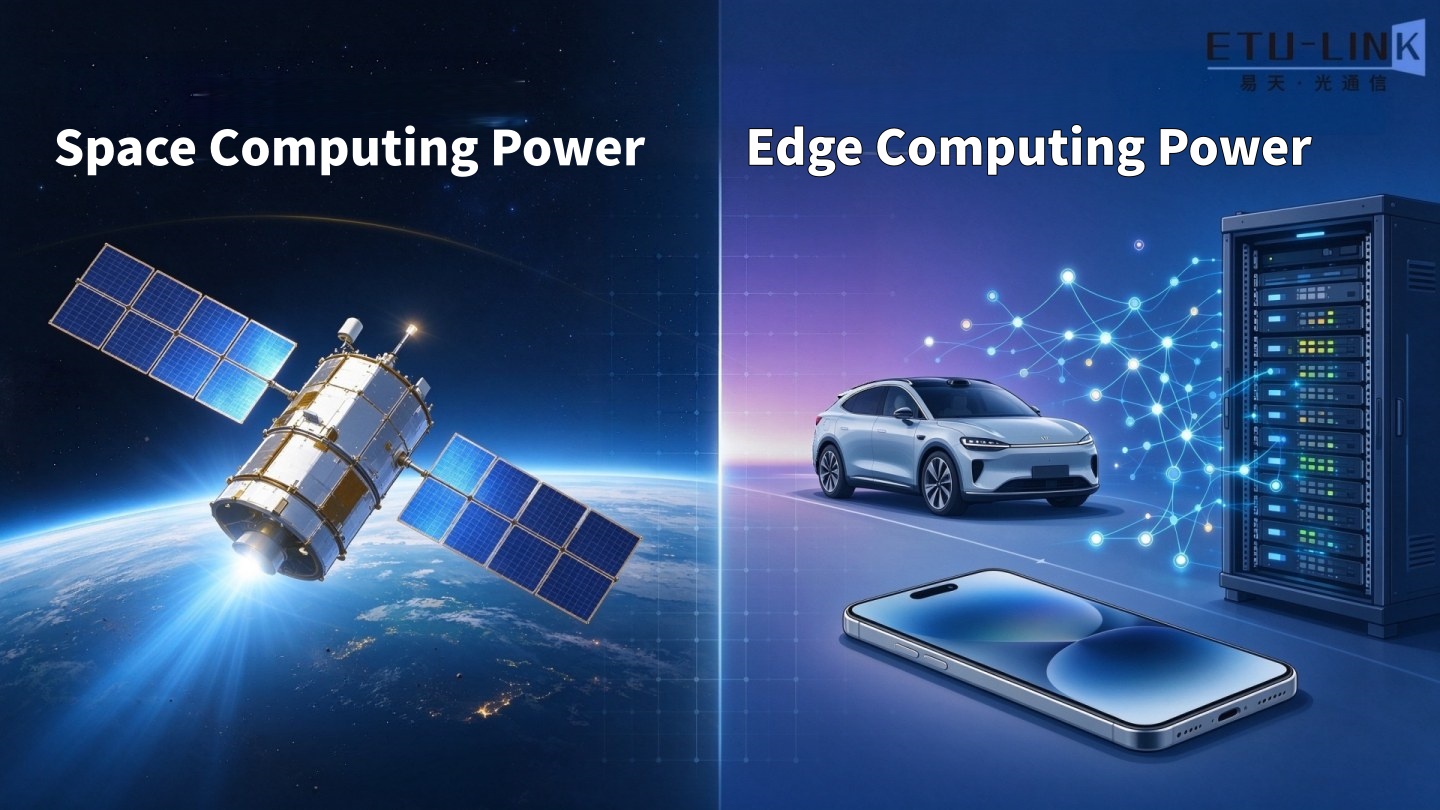
Computing power is no longer confined to ground-based server rooms; it is moving upwards and downwards.
If the previous discussion focused on the "internal upgrade" of ground-based computing centers, then the next two directions represent the "boundary expansion" of these centers.
1. "Into Space": Space Computing Power
You read that right, computing centers are being moved into space.
Why? Three reasons: First, space requires almost no heat dissipation—the cosmic background temperature is close to absolute zero, a natural "free heat dissipation"; second, space has no land costs or power restrictions; third, direct communication between space and ground can reduce latency.
Currently, space computing power is still in the technology verification phase, but many countries and companies have already begun to deploy it. According to industry observations, the deployment scale and demand for space computing power are not expected to truly materialize until around 2030. Until then, the main focus will remain on technological breakthroughs and commercial validation.
2. "Into the Ground": Edge Computing and Device-Side Computing Power
The counterpart to "ascending to the sky" is "sinking down".
Not all computing power needs to be concentrated in giant data centers. Many scenarios—such as autonomous driving, industrial quality inspection, and real-time video analytics—are extremely sensitive to latency, and data cannot be transmitted thousands of miles to a remote central data center and then back.
Thus, edge computing emerged: small computing nodes are deployed close to users to handle latency-sensitive tasks, while large model training and offline analysis, which are not latency-sensitive, are handled by central computing centers.
Going further down the line, there's edge computing power—directly integrating AI capabilities into smartphones, cars, cameras, and smart home devices. Flagship smartphones in 2026 will already be able to run large models with tens of billions of parameters locally.
3. From "Computing Power Islands" to "A Unified Computing Power Network"
These two directions combined mean that the form of computing centers is changing from a "single building" to a "multi-layered network":
The top layer consists of ultra-large-scale intelligent computing centers, responsible for large-scale model training and scientific computing; the middle layer consists of regional computing centers, responsible for city-level inference and data processing; and the bottom layer consists of edge nodes and end-side devices, responsible for real-time response.
The "national integrated computing power network" that China is currently promoting essentially interconnects these computing power nodes at different levels, and schedules them in a unified manner like a power grid. From "physical aggregation" to "collaborative linkage", from "computing power islands" to "a unified computing power network" - this is the core direction of computing power infrastructure in the next five years.
Ⅴ. Three Common Misconceptions to Dispel First
The most common claims about computing centers are actually only half true.
Misconception 1: More computing power is always better; the larger the facility, the more powerful it is.
This judgment has its merits—in AI training scenarios, the cluster size does indeed determine the upper limit of the model's capabilities.
However, it overlooked a key variable: utilization rate. A UBS research report in 2026 put forward a counterintuitive view: the cumulative computing power demand is about 378GW, while the data center construction pipeline during the same period is also about 378GW - that is to say, in total, the computing power gap may not be as large as the market hype.
The real problem is not whether the total amount is enough, but whether the structure is right: there is a shortage of high-end training computing power and an oversupply of low-end general computing power; there is a shortage of server racks in core cities in the east and insufficient rack utilization in some parts of the west.
A more accurate statement is: it's not about building as many computing centers as possible, but about what type of center you build, where you build it, and who will use it.
Misconception 2: Computing centers are "energy guzzlers" and are not environmentally friendly.
This statement was largely true ten years ago, but it is outdated today.
On the one hand, liquid cooling technology and PUE management have pushed the energy efficiency of data centers to new heights—the PUE of top green data centers has been reduced to below 1.2, which means that for every 1 kWh of electricity used to power the server, only 0.2 kWh of electricity is needed for cooling.
On the other hand, "computing-power collaboration" is transforming computing centers from "major energy consumers" into "carriers for renewable energy consumption." In green energy-rich areas like Zhangjiakou and Qingyang, data centers are directly connected to wind and solar power stations, achieving a green energy utilization rate of over 90%.
A more accurate statement would be: the new generation of computing centers is not only becoming greener, but is also driving the development of the new energy industry.
Misconception 3: Computing centers are merely "infrastructure" and have nothing to do with the average person.
Many people think that computing centers are just infrastructure built by large enterprises and governments, and have nothing to do with their daily lives.
But every time you use AI for dialogue, every time you browse recommended videos, every time you use navigation, every time you make a high-definition video call—there is a computing power center supporting it behind the scenes. The cost, efficiency, and deployment of computing power will ultimately determine the price, response speed, and popularity of AI applications.
More importantly, computing power is transforming from a "dedicated resource" into a "public good," much like electricity did in the past. Many industries in the future—healthcare, education, manufacturing, and scientific research—will "use computing power" just like they use electricity today.
Ⅵ. Four Indicators for Assessing Future Trends in Computing Power
If you want to judge whether a computing power center project, a computing power industry, or an industry report is truly valuable, you don't need to be confused by various new concepts. You can start by looking at four variables:
1) Consider power density. Is a computing center a traditional rack (5-10kW per rack) or an intelligent computing rack (30-50kW or even higher per rack)? The higher the power density, the more likely it is serving high-value scenarios such as AI training, rather than traditional hosting services.
2) Look at PUE and the percentage of green electricity. Can PUE be kept below 1.25? Does the green electricity utilization rate exceed 50%? These two figures determine its long-term operating costs and compliance risks. Policy red lines will only become stricter, and failure to meet them will become a hidden burden.
3) Consider the location logic. Where is it built, and why? Is it to be close to users for low latency, or close to energy sources for low cost? Only projects with a clear location logic are sustainable.
4) Consider utilization rate. The size of the facility is less important than the rack utilization and uptime. A 10,000-card cluster with only 30% utilization is less valuable than a 1,000-card cluster running at full capacity. The value of a computing center lies not in its scale, but in its turnover rate.
These four indicators are more helpful in making judgments than any grand narrative of "the future is here" or "trillion-dollar industry".
Concluding Remarks
The changes that global computing centers are undergoing are not simply a matter of "building more data centers".
It is a superposition of three leaps: a technological leap from traditional IDC to intelligent computing center, a spatial leap from proximity to users to proximity to energy, and a morphological leap from a single building to a multi-layered network.
What is certain at present is that AI's demand for computing power is still growing rapidly, and green and intensive development are irreversible trends. However, its ultimate destination depends on advancements in chip technology, changes in electricity costs, and whether AI applications themselves can truly absorb such a large investment in computing power.
One question worth watching closely is: when the four major tech giants pour nearly a trillion dollars into building computing centers every year, can these investments ultimately be transformed into AI services that ordinary people can actually use? If the answer is yes, then all the computing center construction we are seeing today is just the beginning.
For inquiries about our products or pricelist, please leave your information with us and we will be in touch with in 24 hours.


 13th Floor, Building 6, Honghualing Base, Nanshan Intelligent Manufacturing Base, Liuxian Avenue, Taoyuan Street, Xili, Nanshan District, Shenzhen, China
© Copyright: 2026 ETU-Link Technology CO ., LTD All Rights Reserved.

IPv6 network supported
Friendly Links:
易天官网