English



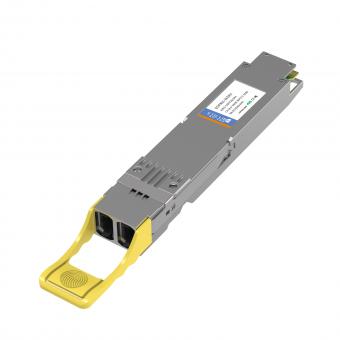
With the large-scale deployment of 800G AI computing clusters, many buyers only focus on optical parameters such as SR8/DR8/FR4 during procurement, neglecting the differences between IHS and RHS packaging. This leads to problems such as modules not fitting into the cage, insufficient heat dissipation, and project delays. This article thoroughly explains the differences between the two mainstream O...
In the past, when discussing AI computing power, everyone's attention was focused on GPU and servers, but in 2026, the trend completely changed. From top-level documents from the Ministry of Industry and Information Technology and the National Development and Reform Commission to a series of support plans from Guangdong Province and Shenzhen, a series of important policies have been implemented in...

When people mention PCB (Printed Circuit Board), many think of it as just an ordinary green board used in electronic products for soldering chips and connecting cables. But few know that in today's era of skyrocketing AI computing power, a dedicated PCB for AI servers costs 1000 times more than a circuit board for ordinary household appliances! Today we'll break down the seemingly insignificant PC...

Reuters reports that the U.S. FCC is pushing forward with new regulations that plan to restrict the entry of Chinese-made 1.6T and 3.2T high-speed optical modules into the U.S. market. On August 7, a third supplementary rule announcement was released, officially opening a 30-day comment period followed by a 45-day response period for public feedback. The US has repeatedly raised the issue of "data...

The rapid upgrade of AI computing power and the significant increase in network transmission bandwidth and latency requirements for large-scale model training have rendered traditional 400G networks, which are now limited in performance and unable to meet the demands of high-end intelligent computing scenarios, a new iteration cycle has begun.The industry is now entering a phase of large-scale com...
The true core strength and the industry's biggest bottleneck—Indium Phosphide (InP) —is the only core substrate material for high-speed optical modules, EML lasers, detectors, and optical chips . China holds more than 70% of the world's refined indium production capacity and has long included indium phosphide in its export control list. Coupled with the continuous explosion of AI computing power, ...
AI computing infrastructure is expanding at full speed. 800G OSFP and QSFP-DD Optical Modules have fully entered the market adoption cycle. The industry is generally showing a differentiated pattern where leading manufacturers are operating at full capacity and order schedules are lengthening, while small and medium-sized manufacturers are accelerating production expansion to grab market share. Th...

As the AI computing power race intensifies, Google is aggressively expanding its global computing infrastructure. In this arms race, optical modules, serving as the "highway" for data transmission, have become one of the core procurement categories for Google's data center construction. Based on data from third-party organizations such as TrendForce and LightCounting, the following outlines the ke...
1
22
pagesFor inquiries about our products or pricelist, please leave your information with us and we will be in touch with in 24 hours.


 13th Floor, Building 6, Honghualing Base, Nanshan Intelligent Manufacturing Base, Liuxian Avenue, Taoyuan Street, Xili, Nanshan District, Shenzhen, China
© Copyright: 2026 ETU-Link Technology CO ., LTD All Rights Reserved.

IPv6 network supported
Friendly Links:
易天官网