English



What is the difference between single fiber and dual fiber optical module?
In fiber optic networking, many users ask: What are single fiber and dual fiber optical modules? What is the difference between them? How to choose single fiber vs dual fiber for my project? This article explains definition, structure, wavelength, application, compatibility, and selection rules to help you use them correctly.
What are single fiber optical modules and dual fiber optical modules?
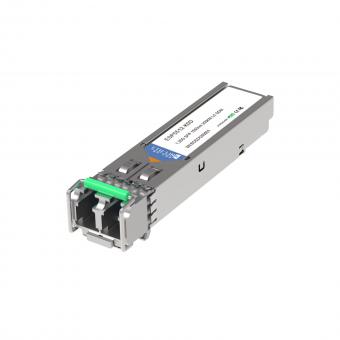
Single fiber optical module is an optical module product with only one optical fiber port. It can transmit and receive optical signals at the same time by inserting only one optical fiber. The dual fiber optical module has two ports, TX is the transmitting port and RX is the receiving port. Two different optical fibers are required for transmission and reception.
Dual fiber uses two fibers: one for transmit (TX), one for receive (RX).
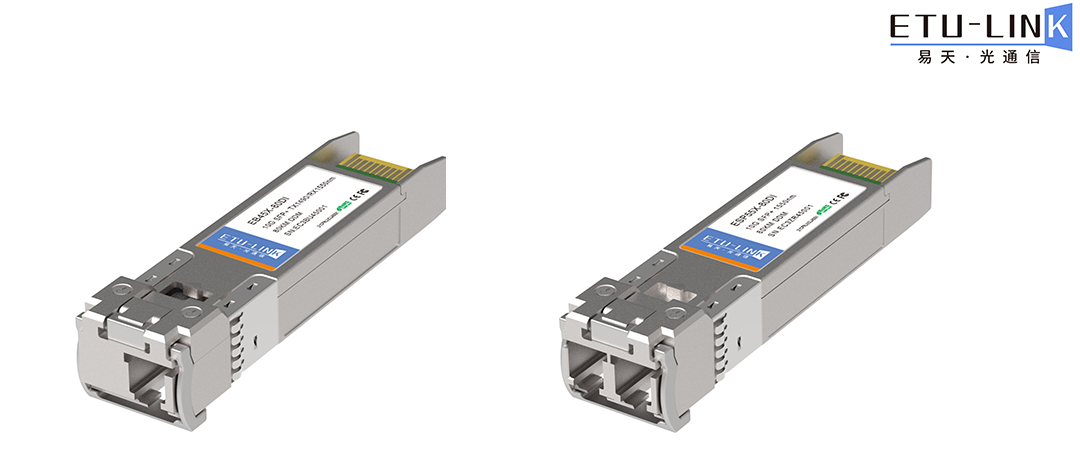
How to Distinguish Single Fiber vs Dual Fiber Optical Modules?
1.AppearanceDifference :
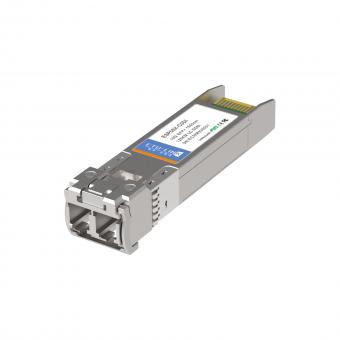
1) The fiber optic module has an optical fiber interface to connect one optical fiber;
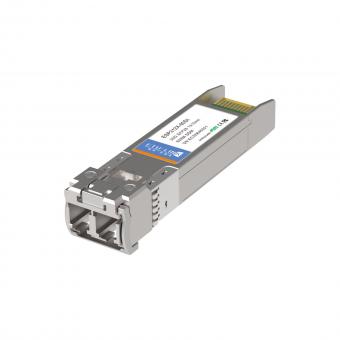
2) The dual fiber optical module has two optical fiber interfaces to connect two optical fibers.
Single fiber: 1 LC port → 1 fiber
Dual fiber: 2 LC ports → 2 fibers
| Giga Single Fiber | 10 Gigabit Single Fiber | Conventional Wavelength of Dual Fiber |
| TX1310/RX1550nm | TX1270nm/RX1330nm | 850nm |
| TX1550/RX1310nm | TX1330nm/RX1270nm | 1310nm |
| TX1490/RX1550nm | TX1490nm/RX1550nm | 1550nm |
| TX1550/RX1490nm | TX1550nm/RX1490nm | |
| TX1310nm/Rx1490nm | ||
| TX1490nm/Rx1310nm |
For example, 10G SFP+ Single Fiber vs Dual Fiber Module Comparison:
| PN | Date Rate | Package Type | Wavelength | Transmission Distance | Working Temperature | Receiving Sensitivity | Connector Type | Optical Device Type |
| ESP31X-10D | 10G | SFP+ | 1310nm | 10KM | 0-70 | <-14.4 | LC | DFB+PIN |
| EB23X-10D | 10G | SFP+ | 1270/1330nm | 10KM | 0-70 | <-14.4 | LC | DFB+PIN |
| EB32X-10D | 10G | SFP+ | 1330/1270nm | 10KM | 0-70 | <-14.4 | LC | DFB+PIN |
Connection Rules
Dual fiber: The devices at both ends can use 10G SFP+ dual fiber optical modules with a wavelength of 1310nm.
Conclusion
Single fiber (BiDi) saves fiber resources and is ideal for 1G/10G long-distance and fiber-shortage scenarios. Dual fiber is simpler, more stable, and mainstream for high-speed 25G+. Choose based on fiber resources, speed, and budget.
ETU-LINK provides full series single fiber and dual fiber optical modules: 1G SFP, 10G SFP+, 25G SFP28, etc., suitable for security, enterprise, and base station fronthaul.
FAQ: Common Questions About Single Fiber & Dual Fiber Modules
(1) Can single fiber and dual fiber modules be used together?
No. Single fiber needs 1 fiber; dual fiber needs 2 fibers. Their working principles are different and cannot communicate.
(2) Which is cheaper: single fiber or dual fiber?
Single fiber module is more expensive, but saves 50% fiber resources. Total project cost is often lower.
(3) Can single fiber modules achieve the same distance as dual fiber?
Yes. Both can support 10km, 20km, 40km, 80km. Performance is similar.
(4) Why is single fiber rare in 100G/400G?
High-speed modules require parallel optical channels. Dual fiber or multi-fiber (MPO) is more stable.
(5) What does BiDi mean?
BiDi = Bidirectional, which is the technical name for single fiber optical module.
Last updated: May 21, 2026
For inquiries about our products or pricelist, please leave your information with us and we will be in touch with in 24 hours.


 13th Floor, Building 6, Honghualing Base, Nanshan Intelligent Manufacturing Base, Liuxian Avenue, Taoyuan Street, Xili, Nanshan District, Shenzhen, China
© Copyright: 2026 ETU-Link Technology CO ., LTD All Rights Reserved.

IPv6 network supported
Friendly Links:
易天官网