English




Why Are Optical Modules Essential for the Large-Scale Deployment of Autonomous Driving?
As driverless cars move from single-unit testing to collaborative operation of dozens or hundreds of vehicles, the shortcomings in communication infrastructure will be exposed earlier than perception and algorithms.
Urban logistics and smart mining are becoming the two main tracks for the commercialization of autonomous driving, and impressive implementation data outlines the rapid expansion of the industry.
Ⅰ. The Shenzhen Model: Nighttime Autonomous Delivery Scales Up Rapidly
Shenzhen, leveraging its pioneering policy of opening up nighttime road rights nationwide, has created a model for urban unmanned delivery. After several months of implementation, the number of nighttime logistics delivery routes has expanded from the initial 2 to 437, with 172 unmanned vehicles in operation. In July, the unmanned vehicles traveled approximately 40,000 kilometers at night, representing a 32% increase in route scale and a 60% month-on-month increase in the number of operating vehicles. From station-based parcel pick-up and cross-regional transfers using "unmanned vehicles + subway" to on-demand delivery for small and medium-sized businesses, unmanned transportation capacity has moved beyond experimental scenarios and is deeply embedded in the city's essential logistics network.
Ⅱ. The Mining Boom: Autonomous Mining Trucks Grow Nearly 100-Fold in Six Years
In open-pit mines far from cities, unmanned mining trucks have experienced explosive growth, with industry shipments increasing nearly 100-fold in six years. As of the end of June 2026, nearly 8,500 sets of unmanned mining autonomous driving systems had been shipped domestically, with nearly 6,000 units in regular online operation. The market expects annual shipments to exceed 10,000 sets. Analysts predict that in the next two to three years, annual shipments of mining trucks could reach 20,000 units, and the application will gradually expand from large open-pit mines to small and medium-sized mines. Complete domestically developed smart mining solutions have already reached Southeast Asia, Africa, and Latin America, offering significant cost advantages and faster deployment efficiency compared to similar overseas solutions.
Ⅲ. The Overlooked Optical Hub: What Role Do Optical Modules Play?
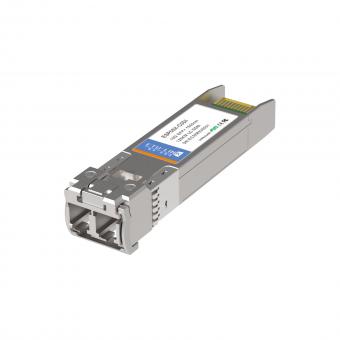
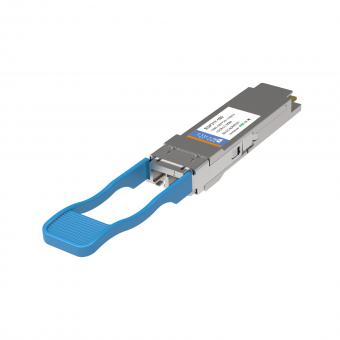
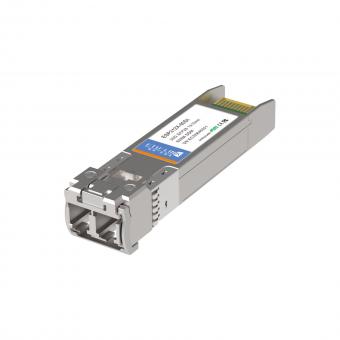
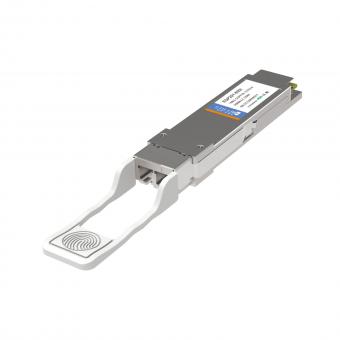
Many analyses focus on LiDAR, vehicle computing power, and autonomous driving algorithms, but easily overlook a fundamental premise: whether it's a city delivery vehicle or a mining heavy truck, multiple LiDARs and multiple high-definition cameras continuously collect environmental information, generating massive amounts of point cloud, image, and positioning data streams. The sensing hardware is responsible for capturing the external environment, the computing unit is responsible for real-time decision-making, and the optical module undertakes the core function of photoelectric signal conversion . Relying on fiber optic media, it builds a high-bandwidth, low-latency, and interference-resistant data channel, which is an indispensable hardware pillar of the vehicle-road-cloud collaborative system.
Ⅳ. Urban Scenarios: Concurrent Monitoring Puts Communication Capacity to the Test
Large-scale unmanned delivery in cities tests the concurrent capacity and real-time monitoring capabilities of communication systems. The management platform needs to capture 42 operational metrics for each unmanned vehicle in real time, automatically identify 17 types of risk events such as route deviation, abnormal parking, and lost packages, and simultaneously push alarm information to multiple parties to form a closed-loop management system. With a large number of vehicles operating simultaneously at night, coupled with cross-regional intermodal dispatching, traditional copper wire transmission is susceptible to electromagnetic interference and bandwidth limitations at night. By establishing a fiber optic transmission network between roadside sensing devices, edge computing rooms, and the city's monitoring platform, industrial optical modules ensure stable transmission throughout the entire link, supporting uninterrupted nighttime logistics operations.
Ⅴ. Mining Scenarios: Extreme Operating Conditions Drive Demand for Industrial-Grade Optical Modules
Mining conditions place extreme demands on the environmental tolerance of optical modules. Mining trucks operate year-round in rain, snow, fog, temperatures as low as -40°C, high dust levels, and strong electromagnetic interference, requiring precise identification of obstacles 10 centimeters away at a distance of 40 meters to achieve automatic obstacle avoidance and precise loading/unloading. When dozens of mining trucks operate in formation, the volume of radar data is enormous, and ordinary wireless communication is prone to packet loss and latency jitter, making it impossible to deliver control commands in real time. A self-built fiber optic ring network in the mining area, coupled with industrial-grade optical modules, connects vehicles, roadside sensing base stations, and the dispatch center, enabling unified fleet dispatch. When domestically produced mining solutions are exported, this communication infrastructure is also delivered simultaneously as part of the overall solution.
Ⅵ. Demand Focus: Two Main Tracks—Vehicle-Side and Road Network-Side
Many readers may wonder whether all the optical modules are built into the body of the autonomous vehicle? Current market demand is divided into two directions:
1) Vehicle-mounted: The vehicle-mounted optical module is deployed inside the vehicle to connect radar, cameras and the vehicle-mounted computing host, solving the bottleneck of high-speed data interaction inside the vehicle;
2) Road network (currently the main driver of growth): It serves the integrated vehicle-road-cloud architecture, supports data communication between roadside equipment, edge computing nodes, and cloud scheduling platforms, and is also the first demand driven by the increase in unmanned delivery and smart mines.
Compared to general-purpose optical modules for data centers, automotive and industrial-grade optical modules have higher product requirements, needing to meet industrial-grade standards such as shock resistance, wide temperature range, and high stability to adapt to complex urban road conditions and extreme environments in mining areas. The autonomous driving industry has also moved beyond sporadic pilot projects and entered a stage of replicable and scalable commercialization.
Ⅶ. Conclusion: The Communication Infrastructure Determines the Upper Limit of Clustering
Algorithms and sensors determine whether a single autonomous vehicle can operate independently, while the communication infrastructure determines whether an entire fleet of autonomous vehicles can operate safely and collaboratively. In the cluster deployment phase, the value of perception and computing power can only be realized through stable data transmission links.
In short, in the wave of large-scale autonomous driving, automotive and industrial optical modules are easily underestimated but indispensable underlying hardware. As unmanned transportation capacity continues to expand, this invisible optoelectronic information channel will also open up new growth opportunities.
Categories
New Blog
Tags
For inquiries about our products or pricelist, please leave your information with us and we will be in touch with in 24 hours.


 13th Floor, Building 6, Honghualing Base, Nanshan Intelligent Manufacturing Base, Liuxian Avenue, Taoyuan Street, Xili, Nanshan District, Shenzhen, China
© Copyright: 2026 ETU-Link Technology CO ., LTD All Rights Reserved.

IPv6 network supported
Friendly Links:
易天官网