English



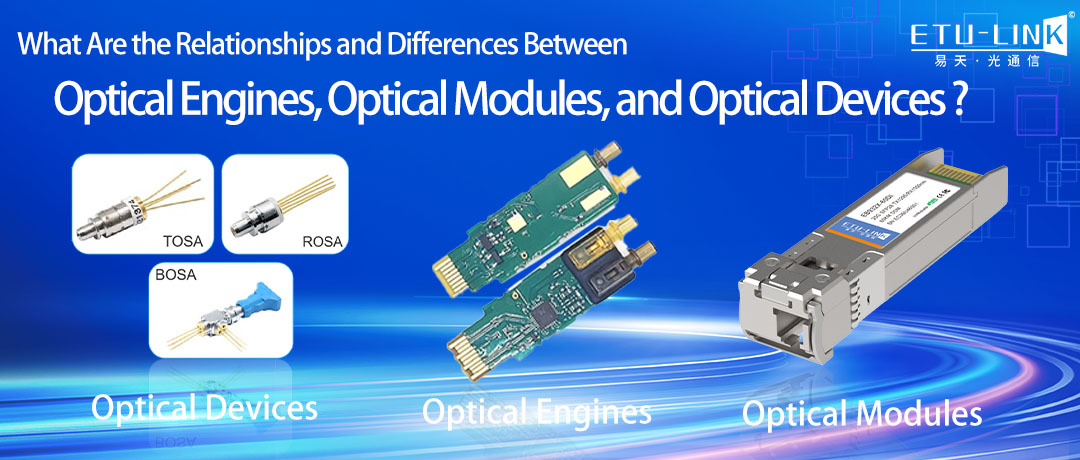
As AI large-scale models accelerate their iteration, computing power clusters are moving from "thousands of cards" to "tens of thousands of cards" and "hundreds of thousands of cards." As the "blood vessels" connecting computing power, the internal hierarchical relationships of optical communication are becoming increasingly crucial. However, optical devices, optical modules, and optical engines a...
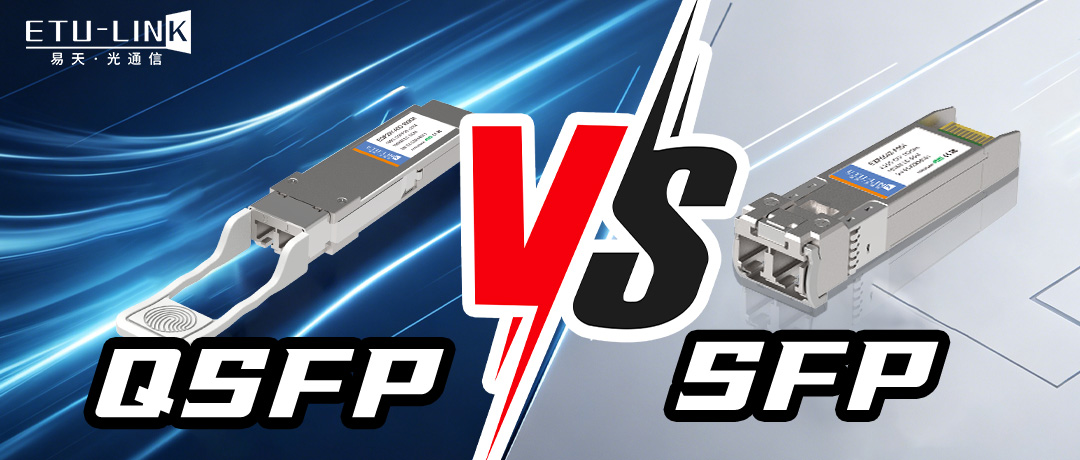
In popularizing optical modules, SFP and QSFP are often confused. They are actually packaging interface standards from different eras, with the core differences being size, number of channels, and data rate, which determine their application scenarios and adaptation requirements. Simply put, the packaging of an optical module is like a mobile phone charging interface, iterating and upgrading with ...

Push open the door to the data center, and amidst the humming server racks, countless thin optical fibers are carrying massive amounts of data. At the source of these fibers, a component the size of a fingernail — an optical chip—determines the performance ceiling of the entire communication system. Today, we'll discuss the most crucial choice for optical modules: direct-modulated lasers (DML) ver...

In today's rapidly evolving technological landscape, the convergence of drones and optical communication is becoming a key force driving industry transformation. The following will elaborate on the relationship between drones and optical communication, trends in optical module products, and future prospects. I. The Relationship Between Drones and Optical Communications: Optical Modules as Core Com...

Comparative Analysis of PAM4 and NRZ Modulation Technologies PAM4 and NRZ are two mainstream digital signal modulation technologies in optical communication and high-speed data transmission. Their fundamental differences lie in the number of signal levels, transmission efficiency, and anti-interference capabilities. The following analysis will examine them from three dimensions: principles, c...
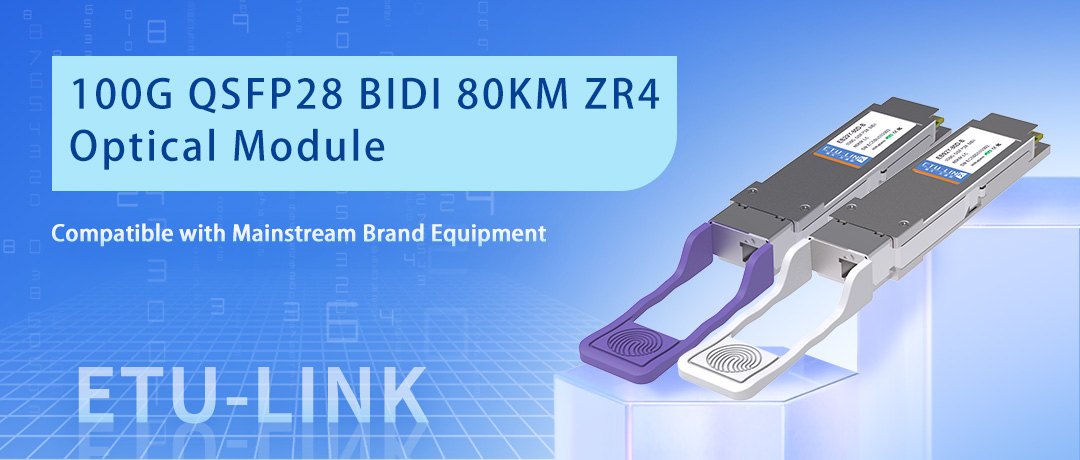
100G BIDI 80km ZR4 Optical Transceiver: The Revolutionary Solution for Long-Distance Transmission Ⅰ.Market Overview: Rising Demand and Maturing Technology Drive Adoption Driven by data center interconnections, 5G network deployment, and metropolitan backbone network upgrades, demand for 100G BIDI 80km ZR4 optical modules continues to grow. Its core advantage lies in its single-fiber bidirectional ...

Optical modules, as core components of optical communication systems, are essentially "signal translators" connecting the digital world. At the transmitting end, they convert electrical signals into optical signals for transmission via optical fiber, and at the receiving end, they are converted back into electrical signals, enabling seamless data interaction between devices. From speeds leaping fr...

In the digital economy era, data transmission efficiency and stability determine the core competitiveness of a network. Optical modules and switches, as core network hardware, form a closely interdependent and symbiotic relationship—optical modules are the "extension arms" of switches that overcome transmission limitations, while switches are the "command center" for optical modules to function. T...
For inquiries about our products or pricelist, please leave your information with us and we will be in touch with in 24 hours.


 13th Floor, Building 6, Honghualing Base, Nanshan Intelligent Manufacturing Base, Liuxian Avenue, Taoyuan Street, Xili, Nanshan District, Shenzhen, China
© Copyright: 2026 ETU-Link Technology CO ., LTD All Rights Reserved.

IPv6 network supported
Friendly Links:
易天官网