English



Blog

Ⅰ.Computing Power Constraints: The Bottleneck Lies in Transmission, and the Key Lies in Optical Modules Against the backdrop of the rapid expansion of the AI industry, the market has long focused on computing chips such as CPU and GPU, but has neglected optical communication hardware that carries massive data flows. In an interview, NVIDIA CEO Jensen Huang pointed out a key pain point i...

Reuters reports that the U.S. FCC is pushing forward with new regulations that plan to restrict the entry of Chinese-made 1.6T and 3.2T high-speed optical modules into the U.S. market. On August 7, a third supplementary rule announcement was released, officially opening a 30-day comment period followed by a 45-day response period for public feedback. The US has repeatedly raised the issue of "data...

The rapid upgrade of AI computing power and the significant increase in network transmission bandwidth and latency requirements for large-scale model training have rendered traditional 400G networks, which are now limited in performance and unable to meet the demands of high-end intelligent computing scenarios, a new iteration cycle has begun.The industry is now entering a phase of large-scale com...

The true core strength and the industry's biggest bottleneck—Indium Phosphide (InP) —is the only core substrate material for high-speed optical modules, EML lasers, detectors, and optical chips . China holds more than 70% of the world's refined indium production capacity and has long included indium phosphide in its export control list. Coupled with the continuous explosion of AI computing power, ...
Today, optical modules are rapidly iterating from 800G to 1.6T and 3.2T, and optical chip materials and integration routes have become the core points of competition in the industry. Indium phosphide (InP), electro-absorption modulated lasers (EML), silicon-based optoelectronics (SiPho/silicon photonics), and thin-film lithium niobate (TFLN) are not parallel substitutes, but rather a progressive s...
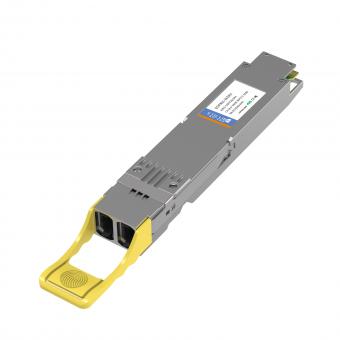
AI computing infrastructure is expanding at full speed. 800G OSFP and QSFP-DD Optical Modules have fully entered the market adoption cycle. The industry is generally showing a differentiated pattern where leading manufacturers are operating at full capacity and order schedules are lengthening, while small and medium-sized manufacturers are accelerating production expansion to grab market share. Th...
As the AI computing power race intensifies, Google is aggressively expanding its global computing infrastructure. In this arms race, optical modules, serving as the "highway" for data transmission, have become one of the core procurement categories for Google's data center construction. Based on data from third-party organizations such as TrendForce and LightCounting, the following outlines the ke...
With the continuous growth of data center traffic, 100G networks have become the industry standard. However, many engineers often face a practical problem when deploying 100G networks: what kind of patch cord should be used with 100G optical modules? Choosing the wrong one can lead to signal attenuation, link failure, or even equipment damage. This article provides a professional overview of the p...

A race to build AI infrastructure with no turning back. In 2026, the US data center industry is experiencing an unprecedented expansion. According to the latest data from TrendForce, the combined capital expenditure of the world's nine largest cloud service providers is projected to reach $830 billion in 2026, a significant year-on-year increase of 79%. Among them, the four major North American te...

The optical communication industry boasts a comprehensive and professional technical terminology system, with numerous abbreviations and professional terms, posing a significant cognitive barrier for newcomers. Having accumulated extensive industry experience and understanding the inefficiency of rote memorization, this article systematically compiles frequently occurring core terms in optical com...

Let’s Talk About the “Invisible Ears” and “Smart Brains” Hidden Within the Internet of Everything. Have you ever wondered how your phone can accurately recognize your voice when you say "Hey Siri" in a noisy environment? How does radar transmit signals to the vehicle's computer in milliseconds when it detects an obstacle in front of the vehicle to make a braking decision? Behind these "smart momen...
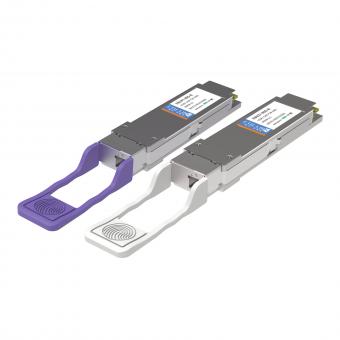
With the explosive growth of cloud computing and AI big data models, and the iterative upgrade from 5G to 6G, network bandwidth demand has seen an explosive increase. From backbone networks to metropolitan area networks, from data center interconnect (DCI) to enterprise core networks, 400G has become the "mainstream threshold" for high-speed transmission. Among them, 400G QSFP-DD LR4, with its uni...
For inquiries about our products or pricelist, please leave your information with us and we will be in touch with in 24 hours.


 13th Floor, Building 6, Honghualing Base, Nanshan Intelligent Manufacturing Base, Liuxian Avenue, Taoyuan Street, Xili, Nanshan District, Shenzhen, China
© Copyright: 2026 ETU-Link Technology CO ., LTD All Rights Reserved.

IPv6 network supported
Friendly Links:
易天官网